Abodu ADU Builders in Pasadena: What to Know First
We build, finish, and repair Abodu ADUs in Pasadena as an independent Abodu service provider. A typical Abodu installation or build-out runs 6 to 14 weeks depending on foundation work, utility trenching, and the city’s permit schedule. We put the price in writing before any work starts, and you get the same number on the final invoice. If you own an Abodu unit and need builders who actually answer the phone, call (626) 657-5541 and speak to a live person.
This page is for Pasadena homeowners who already bought or are considering an Abodu unit and need a local builder to handle site prep, foundation, installation, utility connections, and finish work. It’s also for owners whose existing Abodu needs correction work. We know these units. We’ve built them on lots from Bungalow Heaven to Hastings Ranch. Reed Calloway, our owner, has been working residential projects across the San Gabriel Valley since before Abodu was a startup.
How Abodu Products Fail – and How We Fix Them
Abodu builds a solid prefab ADU. But every prefab platform has weak points once it meets a real Pasadena lot, real soil, and real inspectors. Here’s what we see on Abodu jobs and how we correct it.
- Foundation interface gaps on sloped lots. Abodu’s studio and one-bedroom units ship as completed modules that sit on a site-built foundation. On Pasadena hillside lots with grade changes, the module-to-foundation connection can settle unevenly within the first 18 months. We see door frames shift and drywall hairline cracks at the marriage line. The fix is foundation shimming or pier adjustment followed by re-securing the hold-down points to the manufacturer’s torque spec. Not a patch job. A real correction.
- Utility stub-out misalignment during set day. The Abodu module arrives with plumbing and electrical stubs in fixed positions. If the rough-in plumbing on the foundation is off by even two inches, the connection gets forced and leaks start within weeks. We laser-verify stub positions before the module arrives, and we re-set the rough-in if it’s out of tolerance. This is the single most common avoidable failure on Abodu installs in Pasadena, and it’s almost always a site-prep error, not a factory defect.
- Modular seam flashing failures during Santa Ana wind events. Abodu’s larger two-bedroom models ship in multiple modules joined on site. The seam flashing between modules is factory-specified but installed by the local crew. During Pasadena’s fall Santa Ana winds, we’ve seen improperly lapped flashing lift and let water track into the wall cavity. Our fix is removing the affected flashing, checking the water-resistive barrier underneath, and re-installing with the lap direction corrected to shed water, not catch it.
- Mini-split condensation drainage clogs in Pasadena’s dry-dust months. Abodu units typically include ductless mini-split systems. Pasadena’s long dry season puts fine dust into the air, and that dust clogs condensate drain lines faster than in coastal climates. Owners notice water dripping from the indoor unit or staining near the drain exit. We clear the line, flush it, and install a service cap that makes the next cleaning a ten-minute job instead of a call.
- Hardie siding joint cracking from seismic and thermal movement. Abodu’s exterior cladding includes James Hardie products, which hold up well in Pasadena heat. But when siding joints are butted too tight during field installation, thermal expansion from a 100-degree Arroyo Seco afternoon causes edge spalling at the joint. We see this on south-facing walls most often. The correction involves replacing the damaged plank and re-setting the adjacent joints with the manufacturer’s minimum gap. It’s small work that prevents a much bigger water intrusion problem later.
Our Abodu ADU Builders Process
Every Abodu job we take follows the same sequence. It’s not complicated. It’s just disciplined.
- 1
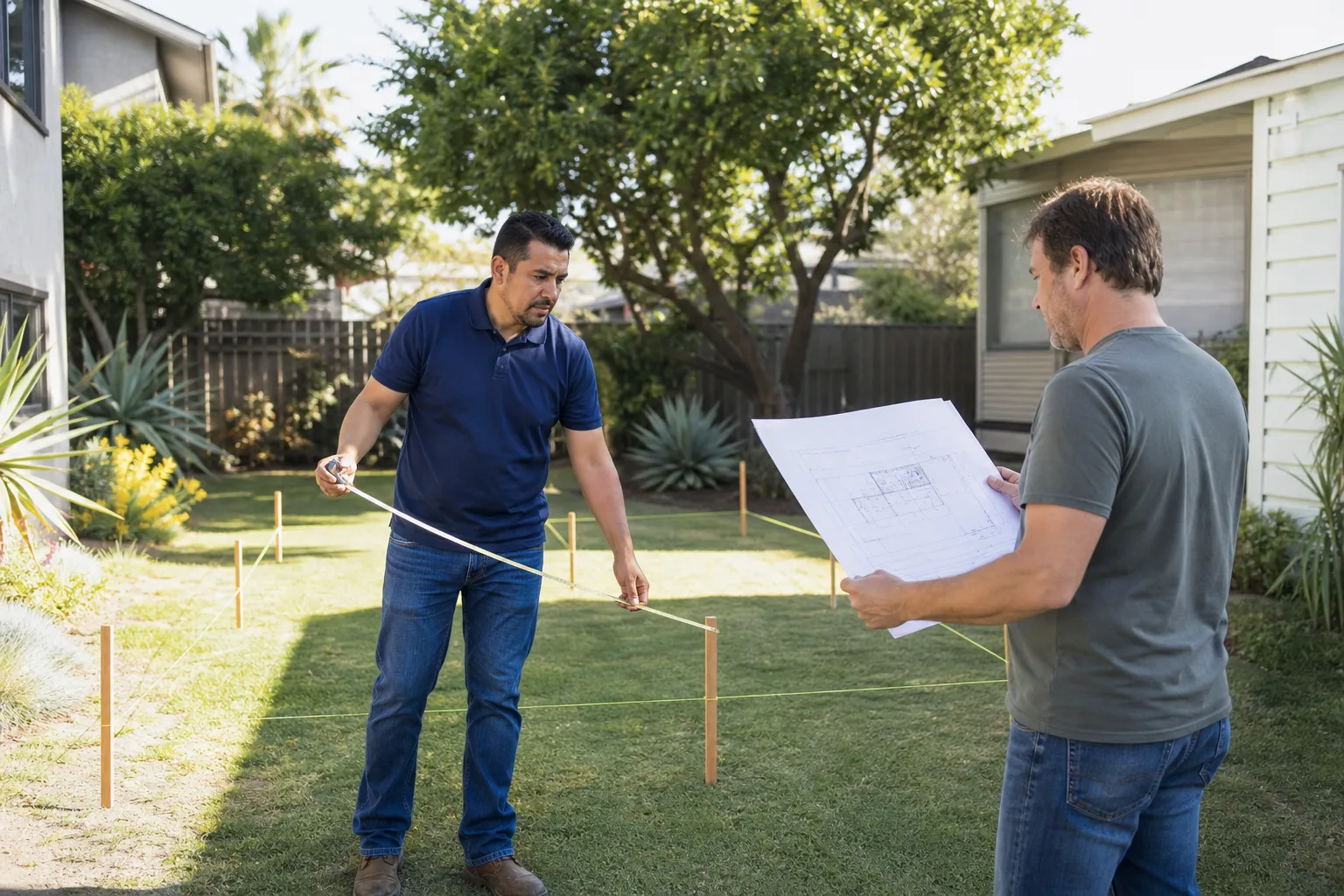
Site walk and written assessment. We visit the lot, check access for the delivery truck and crane, test soil load assumptions, review your Abodu order against site conditions, and write down what’s needed. You get a written scope, not a verbal estimate that changes later.
- 2
Permit plan review and city coordination. We pull the building permit, schedule inspections, and handle the conversations with Pasadena’s permit desk. We’ve done this enough times that we know the questions the city will ask and we answer them before they’re asked.
- 3
Foundation and utility rough-in. We build the foundation to the exact module dimensions, install the plumbing and electrical rough-in at laser-verified positions, and get the under-slab inspection passed before the module ever leaves the factory.
- 4
Set day and module placement. We coordinate the crane and the Abodu delivery. The modules go down, the hold-downs get torqued to spec, and the seams get flashed the way the manufacturer calls for. Reed Calloway is on site for set day on every Abodu install. No exceptions.
- 5
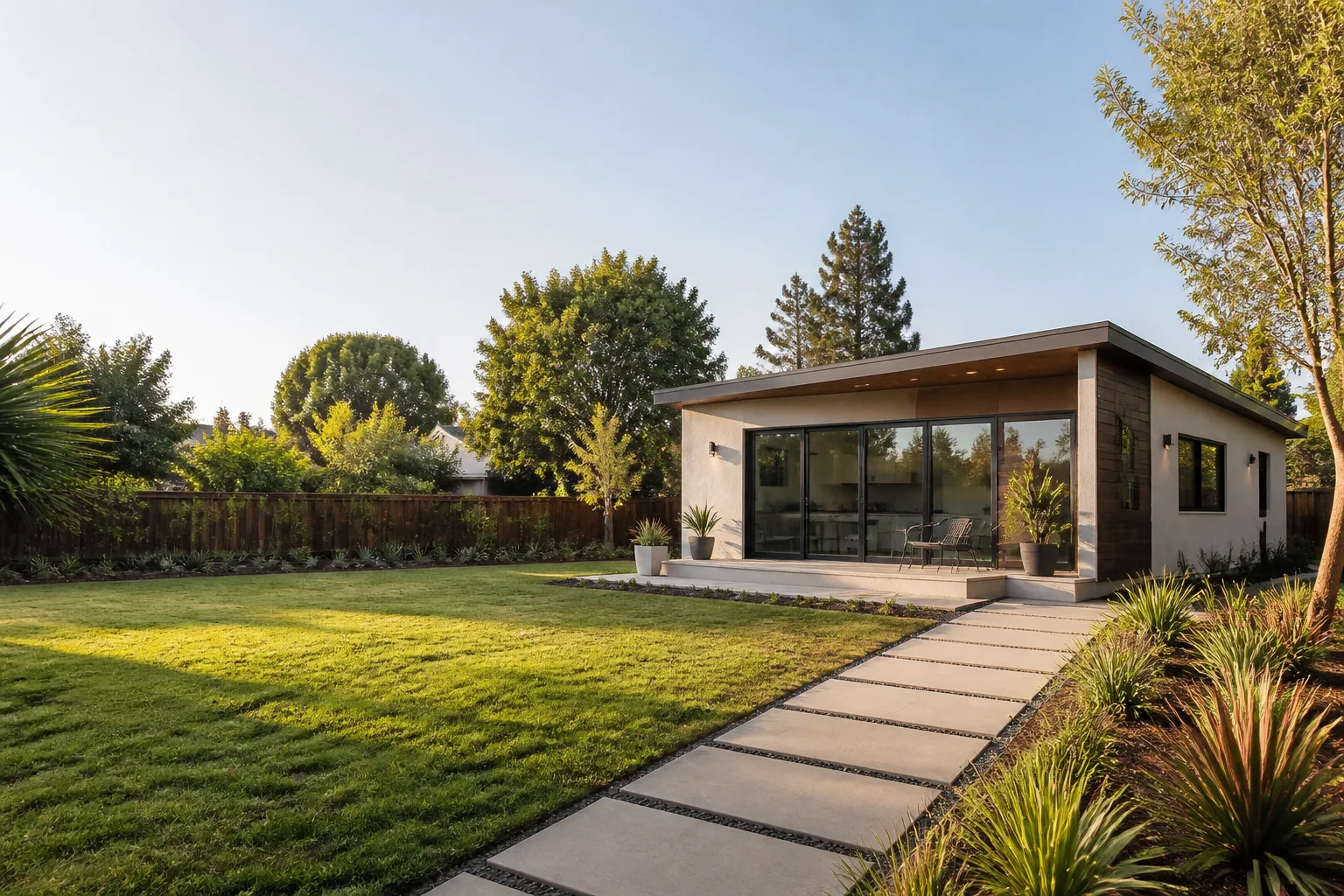
Connections, finish work, and final inspection. We connect utilities, trim out the interior seams, finish any exterior transition work, and walk the unit with the city inspector. When the final inspection passes, you’ve got a legal, permitted ADU.
- 6
The Garrison Standard guarantee in writing. Every Abodu build carries our 365-Day Done Right Promise in writing. If something fails inside a year, we return and correct it at no charge. You get that guarantee on paper before the first day of work.
What Abodu ADU Builders Costs in Pasadena
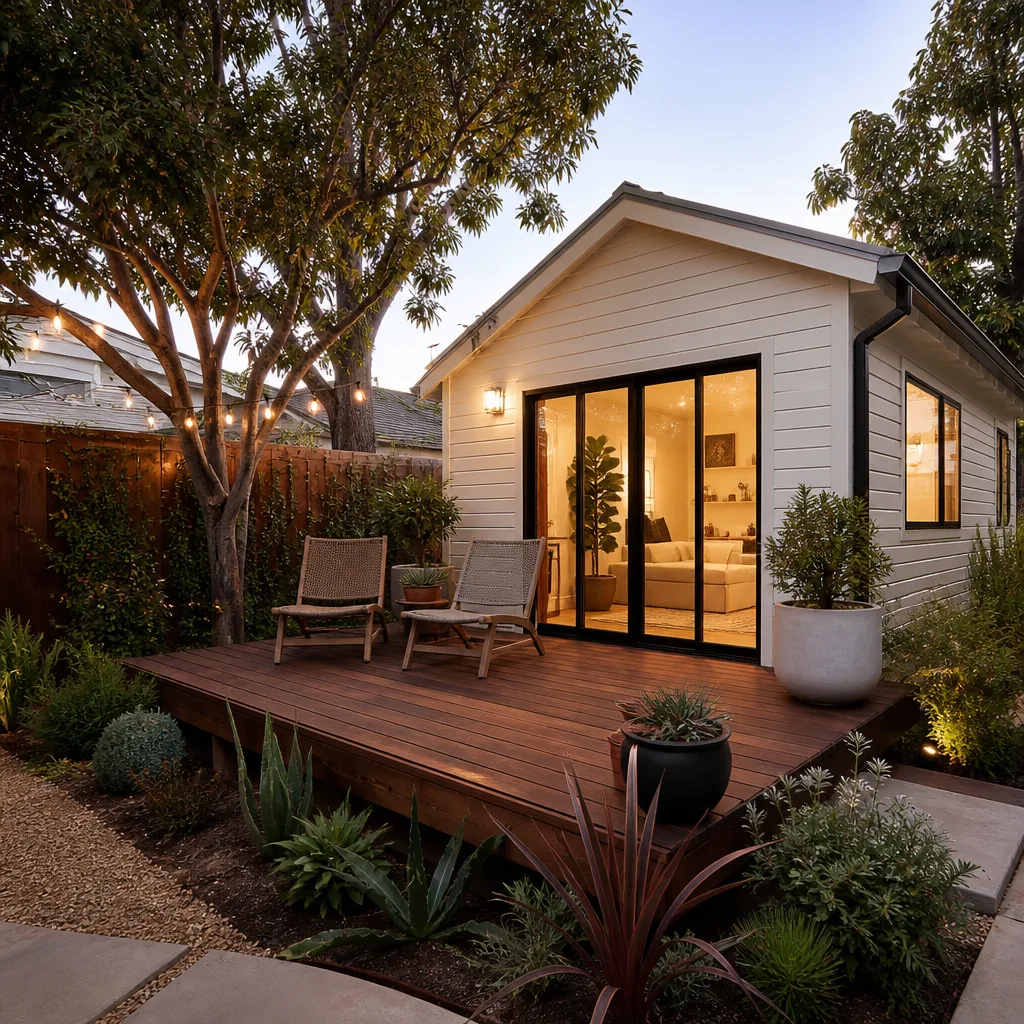
Abodu’s published pricing covers the module. It does not cover what happens on your lot. Here’s what the site-side work runs in Pasadena.
- Site prep, access prep, and demolition: $7,000 to $18,000 depending on what’s on the lot now and how tight the crane access is.
- Foundation (concrete slab or pier system): $18,000 to $42,000. Pasadena soil conditions and seismic requirements push this higher on hillside lots.
- Utility trenching and connections (water, sewer, electrical): $9,000 to $28,000. The spread depends on how far the ADU sits from existing lines and whether Pasadena Water and Power requires a separate meter.
- Permit fees and school district impact fees: $6,000 to $14,000 depending on unit size and current Pasadena fee schedule.
- Module set day and crane work: $5,000 to $12,000 including the crane, operator, and the crew to land and torque the modules.
- Finish and connection work (drywall seams, trim, paint, utility hookups): $8,000 to $22,000.
Your exact number depends on your lot, your utility distances, and the Abodu model you ordered. What doesn’t change is our price discipline. You’ll get the number in writing before work starts, and it won’t move. Call (626) 657-5541 for a free estimate. We’ll walk the site and put the real number on paper.
Why Pasadena Homeowners Call Fielding ADU Pasadena for Abodu Work
Because we’ve been doing this since 2006, and because we hold ourselves to The Garrison Standard, which is written down and applies to every Abodu job we touch. Show up in the window, price in writing, by the book, leave it clean, stand behind it for a year. That’s the whole code. It’s not a mission statement. It’s a list of things we do.
Our crews are background-checked and they show up in uniform, so you know exactly who’s on your property. When you call, a live person answers. At noon or at midnight. We also work with Cover and Dvele units, so if you’re comparing prefab platforms or need someone who understands the differences between them, we can give you a straight answer. The Garrison Partners organization has been building to this standard since 2006, and we’ve kept it because it’s the only way Reed knows how to run a job. Put it in writing, then do what it says.
FAQs
We are not an Abodu-authorized warranty provider, so Abodu’s own factory warranty claims go through Abodu directly. What we handle is the site-side work: foundation issues, utility connections, seam corrections, and finish defects that fall outside the factory warranty or happen after the factory coverage ends. If your issue is site-related, we fix it and guarantee our work in writing for a full year.
A typical Abodu build runs 6 to 14 weeks from site walk to final inspection, with Pasadena’s permit and inspection schedule being the main variable we can only partially control. We can’t promise a city inspector shows up on a Tuesday. What we can promise is that our part moves on schedule and you’ll always know what’s happening next. Call (626) 657-5541 for a realistic timeline on your specific lot.
Yes, and we do this often. The most common correction calls we get in Pasadena are plumbing leaks at the utility stub connections, modular seam flashings that catch water instead of shedding it, and foundation settlement on hillside lots. We assess what went wrong, put the correction in writing with a fixed price, and fix it right. Then we stand behind it for a year under the same guarantee.
For structural and utility components specified by Abodu’s engineering, we use factory-specified or equivalent parts that meet the same engineering spec. For finish materials like trim, siding, and sealants, we use products that meet or exceed what the factory spec calls for, and we tell you which is which before we buy anything. We’ll never put a cheaper part in without telling you, and we’ll put that choice in writing.
A site assessment for an Abodu build or correction is free. We come out, look at your lot, review your existing Abodu order or unit, and give you a written scope. If you move forward, the number on that scope is the number you pay. No charge for the visit and no pressure to proceed. Call (626) 657-5541 to schedule.
Written by Reed Calloway, Owner, Fielding ADU Pasadena at Fielding ADU Pasadena, serving Pasadena and nearby areas.