Mighty Buildings Site Prep & Utilities: The Pasadena Owner’s Guide
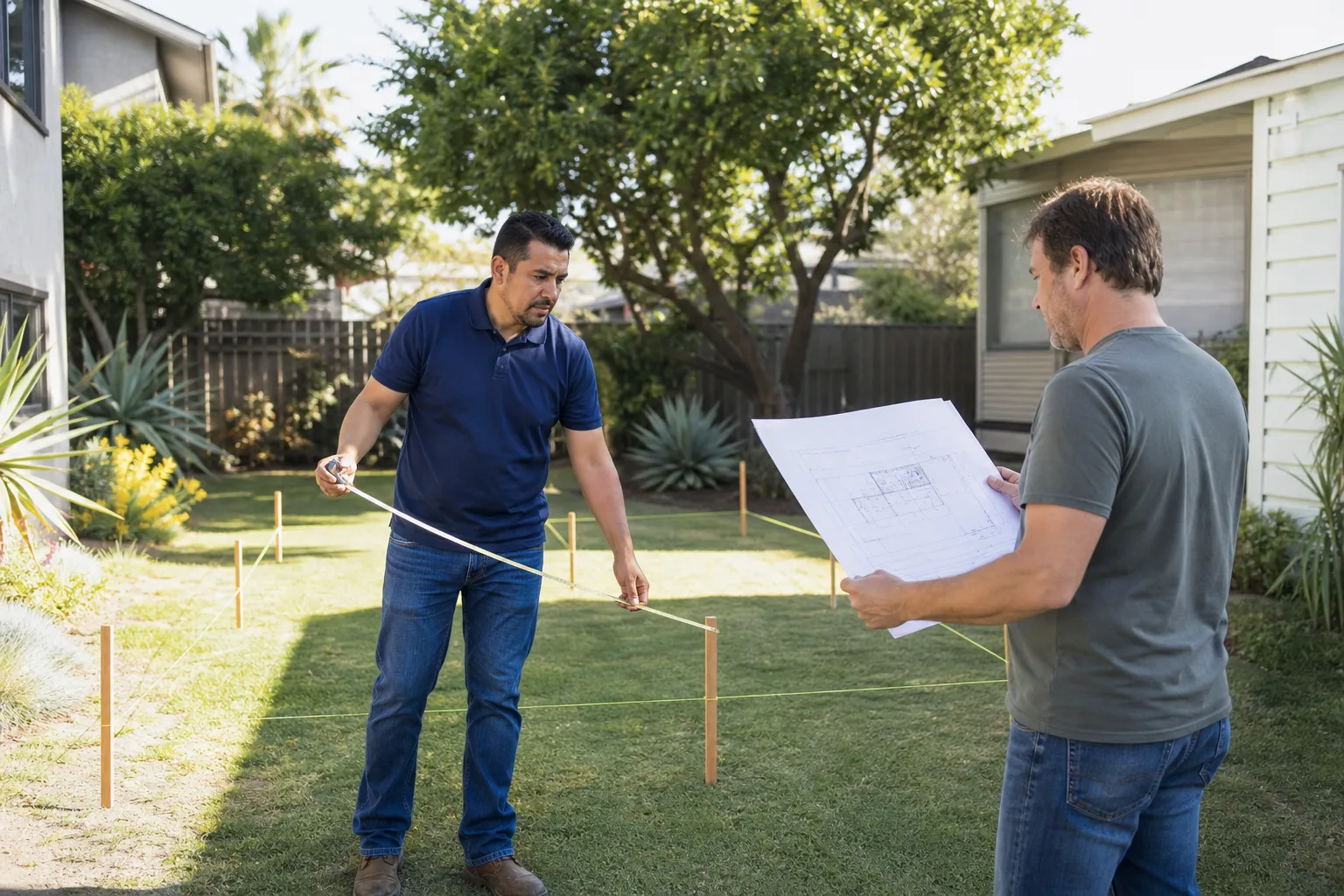
Mighty Buildings site prep and utility work in Pasadena typically runs $8,500 – $22,000 depending on trenching depth, concrete requirements, and how far your panel and sewer taps sit from the pad. Fielding ADU Pasadena stocks the setting materials, anchors, and utility rough-in components needed for Mighty Buildings panel assemblies, and we can usually start within two weeks of permit approval. Most owners don’t discover a site prep problem until the unit is already ordered and the surveyor flags a grade issue, or the existing sewer lateral fails its test and the city won’t sign off. That’s the call we get most often: the ADU is paid for, sitting in a staging yard, and the ground underneath it isn’t ready.
We are an independent service provider. Fielding ADU Pasadena is not affiliated with Mighty Buildings, and we don’t pretend to be. What we do is the part nobody posts about on Instagram: compacted base, anchor layout, underground utilities, and a pad that’s actually flat when the crane shows up.
Which Mighty Buildings Models This Applies To
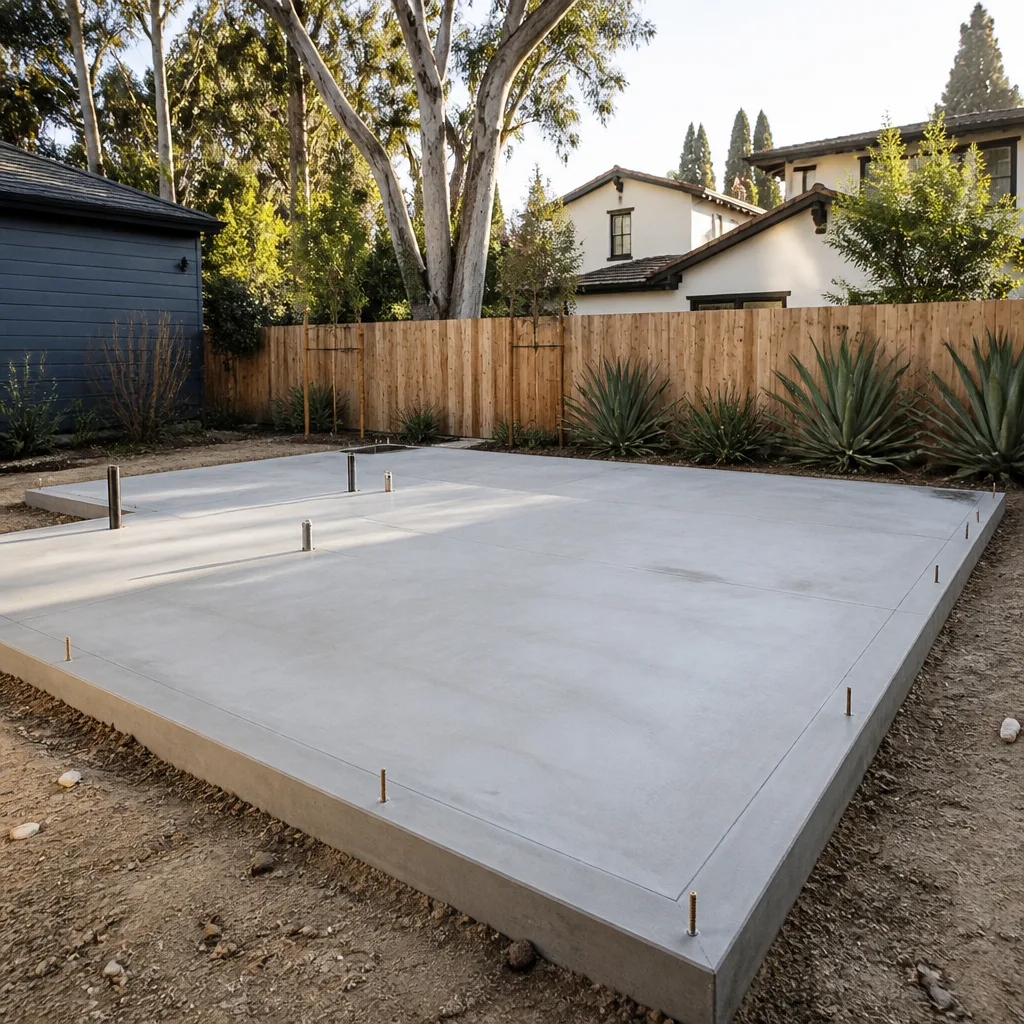
Mighty Buildings ships panelized wall, floor, and roof assemblies rather than a finished box. That changes the site work. There is no chassis to level like a Boxabl, and no full module set like a Cover unit. You’re dealing with a panel system that needs a continuous stem wall or slab with anchor bolt patterns matched to the factory’s shop drawings, and utility stubs that land in the right chases or get abandoned and re-routed at your cost.
The compatibility gotcha we see in Pasadena: Mighty Buildings panels are light compared to conventional stick framing, but the anchor requirements are not optional. The factory’s engineering package calls out specific hold-down and anchor specs, and the City of Pasadena plan checker will hold you to them. If your original site prep was done for a conventional 2×6 wall and you switched to Mighty Buildings mid-permit, the anchor pattern almost never lines up. We’ve had to epoxy new anchors into fresh concrete because the layout changed after the slab pour. Measure twice isn’t a saying here. The shop drawings are the ruling document. We work off them, not off the sales brochure.
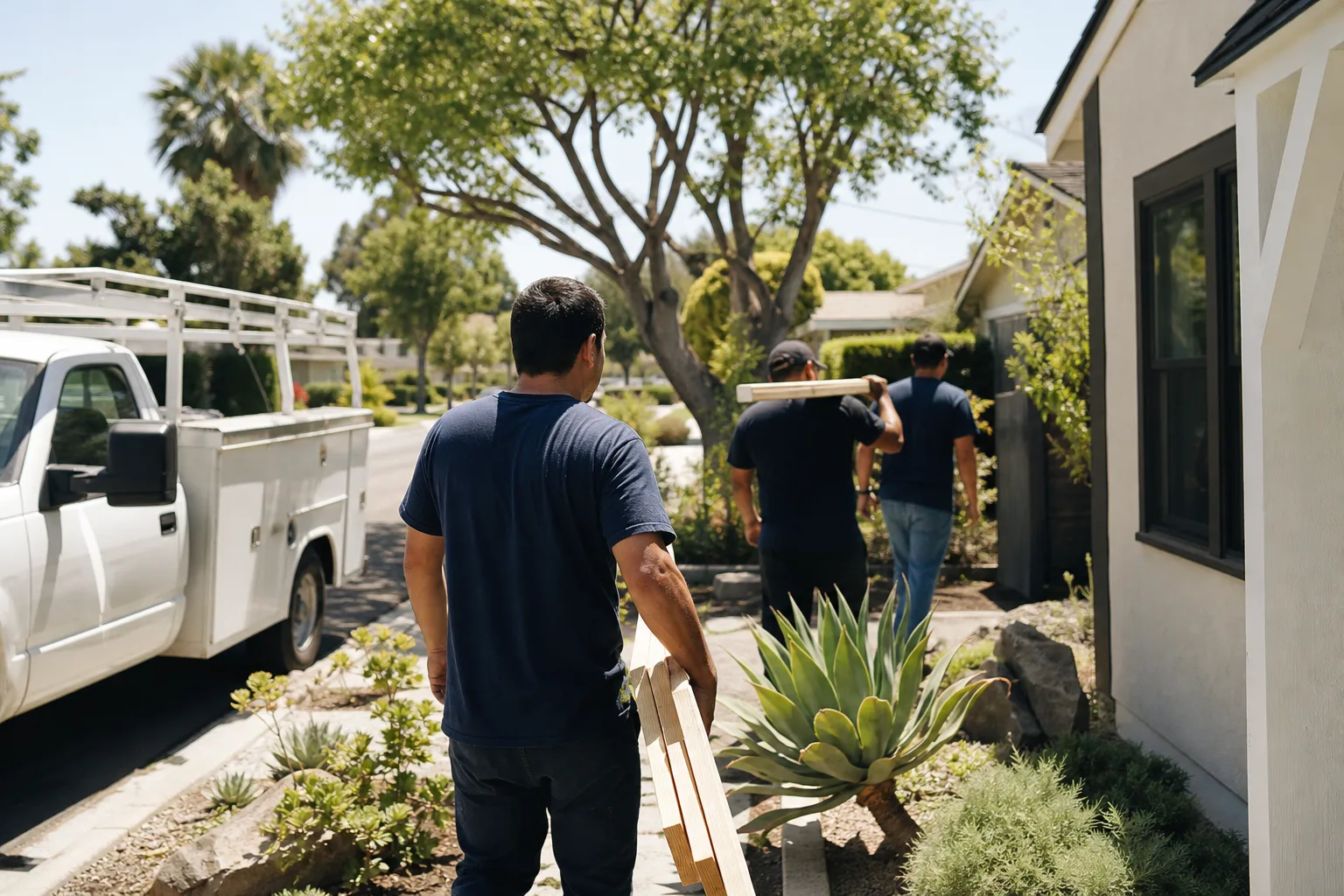
For OEM versus aftermarket on site prep components: the concrete, rebar, anchors, and pipe are commodity trade materials. There is no Mighty Buildings proprietary anchor bolt. But the setting templates and panel alignment guides are worth sourcing directly from the factory’s installer package. We keep both in the truck for Pasadena jobs.
Signs Your Mighty Buildings Site Prep & Utilities Is Failing
- Panel gaps that open after the first rain. The base settled or the slab wasn’t flat within tolerance. Pasadena’s clay soil expands and contracts, and a pad poured without proper compaction will move. The panels don’t flex; the joints open.
- Anchor bolts that spin instead of torque. Either the embedment depth was short or the concrete wasn’t cured before the crane loaded the wall. Once a bolt spins, you’re drilling and epoxying new ones, which means the permit detail changes and the inspector wants to see it.
- Water pooling against the stem wall. Pasadena lots slope, and if the pad drainage was an afterthought, water sits where the panel meets the foundation. That’s how you get efflorescence, sealant failure, and eventually panel face damage the factory won’t warranty.
- Sewer lateral fails the city test. Old Pasadena neighborhoods have clay or cast iron laterals from the 1940s and 1950s. The ADU connection test will fail, and now you’re trenching across the yard while a Mighty Buildings kit waits on the trailer.
- Utility stubs miss the panel chases by inches. The electrician roughed in to a stick-frame plan. The Mighty Buildings panels have specific chase locations. If the stub is six inches off, you’re opening the wall or running surface conduit, and neither one looks right.
Replacement Cost & What’s Included
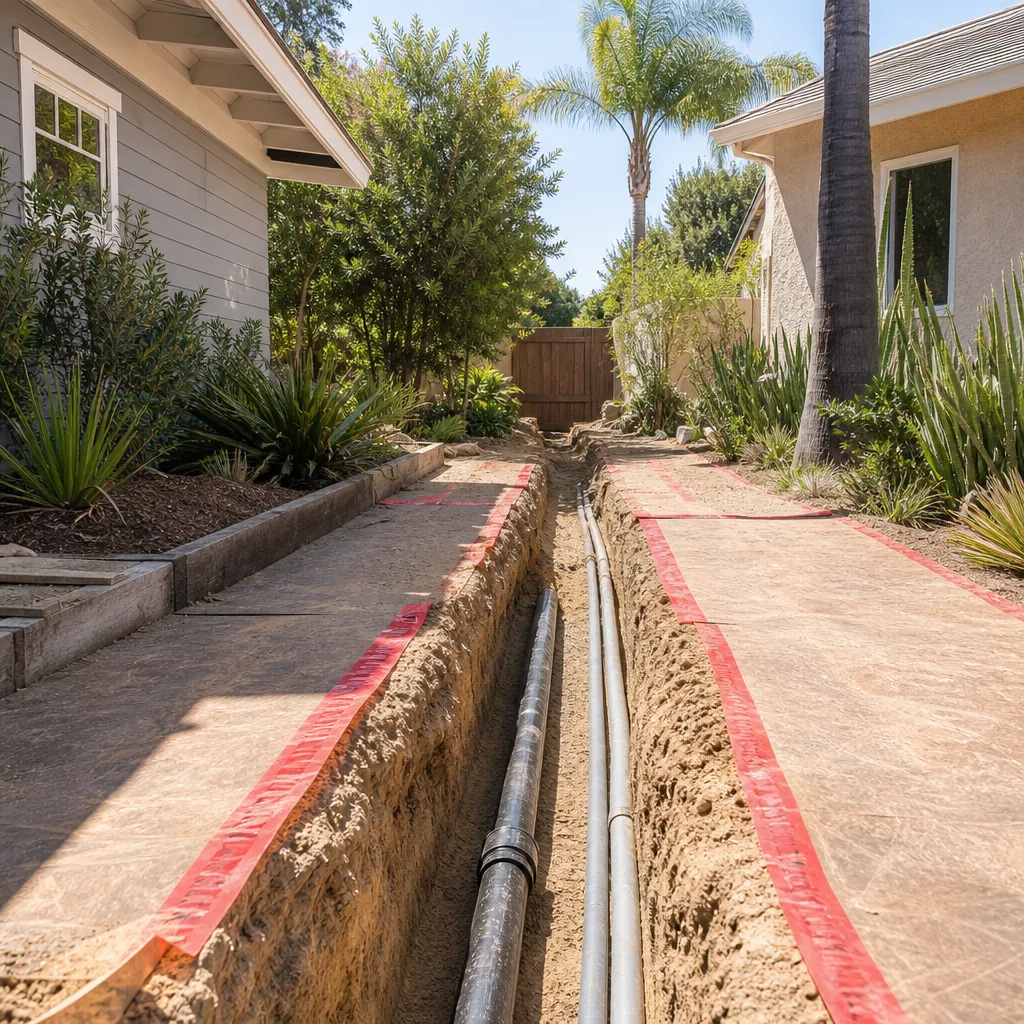
For a standard Mighty Buildings ADU in Pasadena, site prep and utilities break down like this:
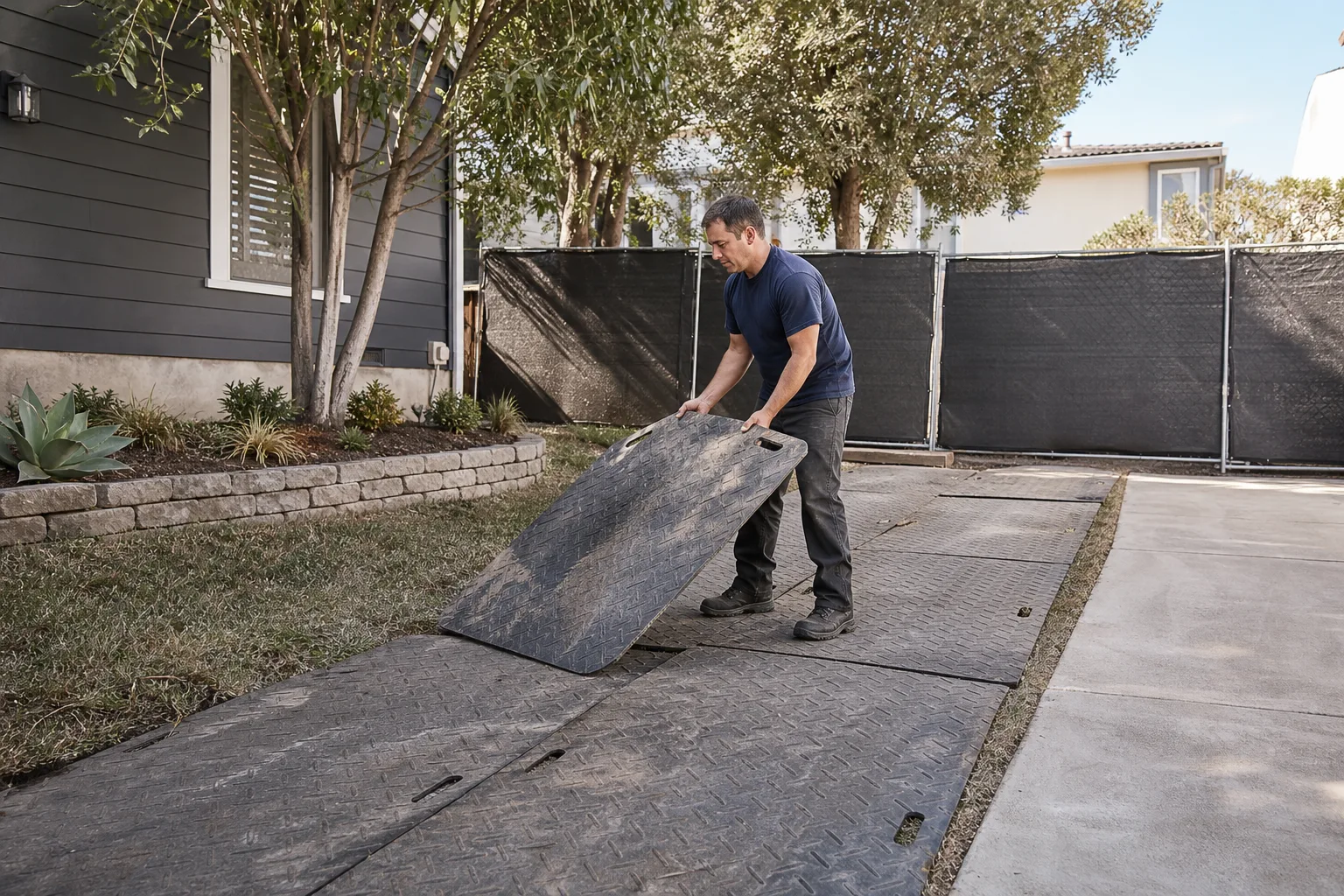
- Pad grading and compaction: $3,500 – $7,000 depending on lot slope and soil condition
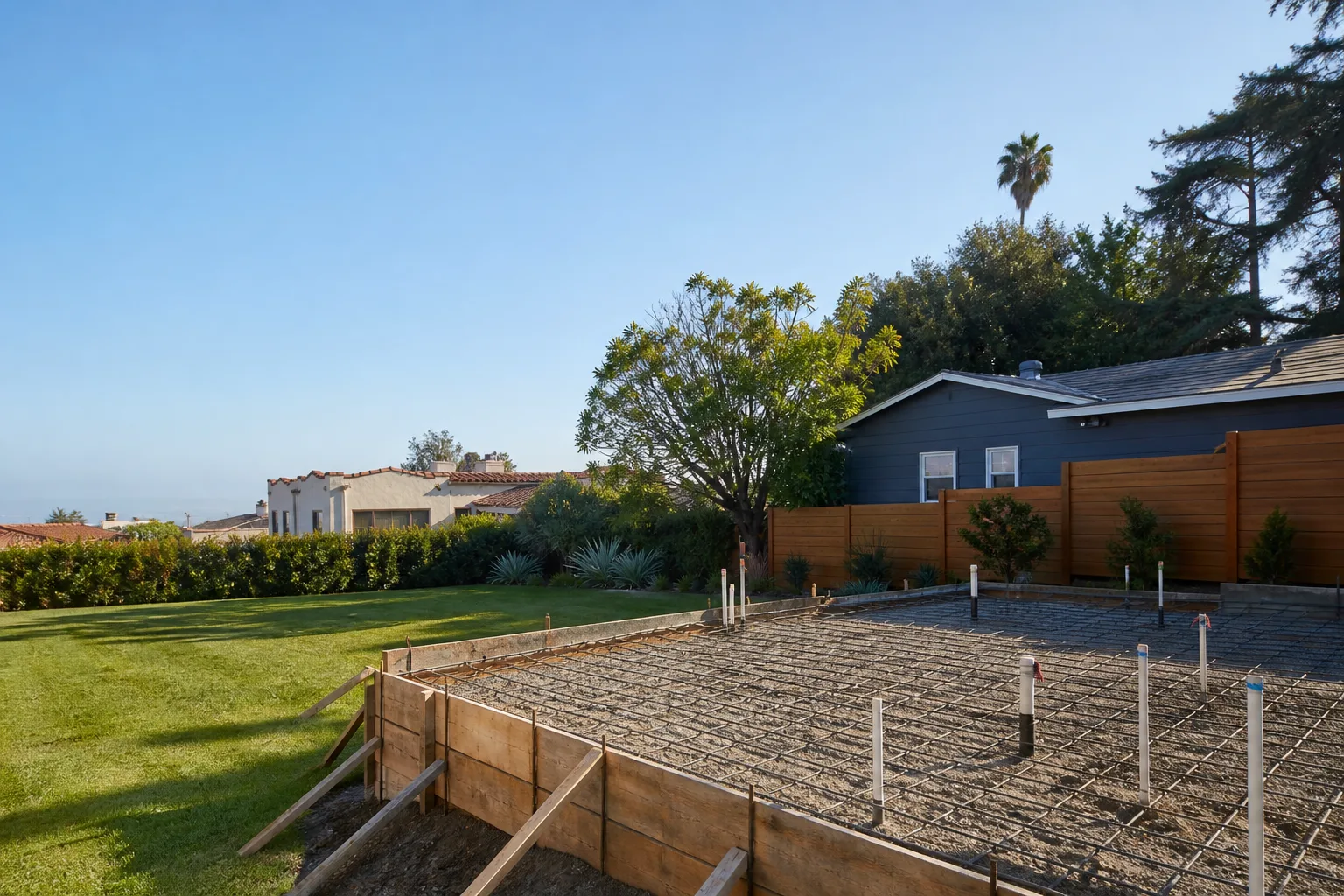
- Concrete slab or stem wall foundation: $6,000 – $14,000 for typical ADU footprints
- Anchor layout and setting per factory drawings: $900 – $2,500 including epoxy anchors where needed
- Utility trenching and stubs (water, sewer, electric): $3,000 – $8,000 depending on distance to existing taps and trench depth
- Permit-related inspections and corrections: $500 – $1,500; Pasadena’s inspectors are thorough and corrections are part of the job
Reed Calloway puts every one of these numbers in writing before work starts. The price you approve is the price on the final invoice. Our 365-Day Done Right Promise covers the site work: if the pad settles, the anchors fail, or the utility stubs leak within a year, we come back and fix it at no charge. No change orders, no door-knock surprises.
Call (626) 657-5541 and we’ll walk the site, take measurements, and hand you a written line-item price. You can price-shop it against anyone in Pasadena. We’d rather have you do that than discover the “good deal” was missing the sewer lateral test.
DIY or Call Us?
An owner can safely do a visual check: walk the pad after rain, look for standing water, check panel joints for movement, verify the anchors are torqued and marked. That costs you nothing and tells us a lot before we even arrive.
What an owner should not do is attempt to correct anchor layout, re-level a settled pad, or move utility stubs. You’re dealing with engineered hold-downs and underground plumbing that has to pass Pasadena inspection. If you drill an anchor into a post-tensioned slab without a scan, you can cut a cable and turn a $900 fix into a five-figure slab repair. We’ve seen it. Same with sewer work: wrong slope, wrong fittings, failed test, and the city requires a re-do by a licensed contractor anyway. Skip the false start and call (626) 657-5541. The site visit is free.
FAQs
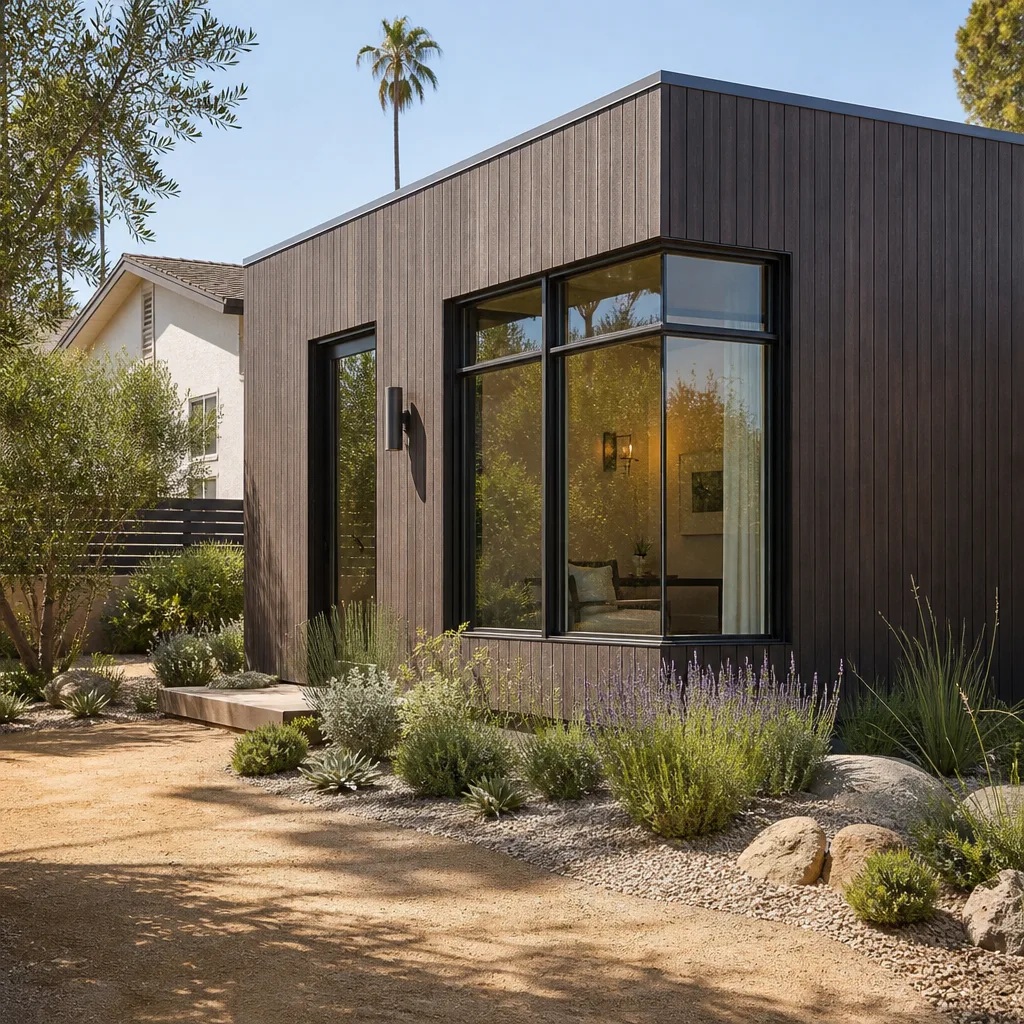
A properly compacted pad with correct drainage lasts the life of the ADU, which in Pasadena’s climate realistically means 50-plus years before any meaningful settlement. The weak points are drainage and anchor corrosion, not the concrete. Get the grade right and the base right, and the site outlasts the panel warranty by decades.
Most failures are repairable without a full re-pour. We use epoxy-set anchors for bolt failures, slab jacking or localized grinding for tolerance issues, and drainage corrections for water problems. A full tear-out is rare and usually only happens when the original pad was poured with un-compacted fill. Call (626) 657-5541 for an exact assessment.
For a typical Mighty Buildings ADU pad in Pasadena, plan on two to four weeks from first grading to utility rough-in passing inspection. Weather and city inspection scheduling move that number. We tell you the schedule in writing alongside the price, and we hold to it.
We keep anchor bolts, epoxy, setting templates, and common utility fittings on the truck for Pasadena jobs. Concrete, rebar, and pipe are ordered per job from local suppliers so the material is fresh and matched to the engineering specs. Same-week repair visits are usually possible for anchor and drainage corrections.
Written by Reed Calloway, Owner, Fielding ADU Pasadena at Fielding ADU Pasadena, serving Pasadena and nearby areas.