Last updated October 15, 2026
DIY vs Professional ADU: The Pasadena Homeowner’s Decision Guide
Here’s the number most ADU advice articles won’t tell you: roughly half of California owner-builders who pull their own permits end up hiring a licensed contractor before the project reaches final inspection. Not because they lack the skill. Because the paperwork, the plan check revisions, and the inspection sequence become a second full-time job. In Pasadena, where plan check for an ADU routinely takes three to six months before a shovel ever hits dirt, that second job can stretch into a year-long sentence. This guide draws the line between what an owner-builder in Pasadena can legally do, what the city will not let you do yourself regardless of skill, and where the real cost difference between DIY and professional actually lands.
You’ll leave knowing the exact trades Pasadena requires licensed subcontractors for, the truth about the five-year owner-builder disclosure the state makes you sign, the line items where DIY labor savings are real versus imaginary, and a hybrid approach that works for homeowners who genuinely want to swing a hammer on part of the job without inheriting a permit liability mess.
Quick Answer
For most Pasadena homeowners, the honest answer is hybrid: do the demolition, painting, and finish work yourself if you have the time and skill, but hire a licensed ADU contractor for structural work, plan preparation, and permit processing. The DIY savings on a Pasadena ADU typically range from $20,000 to $45,000 in labor, but a failed framing inspection or a plan check rejection can eat those savings in two months of delay and revision fees. The decision is less about whether you can build than about whether you can carry the liability, the schedule, and the permit process for twelve months without losing more than you save. For ongoing upkeep after construction, see our Seasonal ADU Care for Pasadena: Year-Round Homeowner’s Guide.
Table of Contents
- What California’s Owner-Builder Law Actually Allows in Pasadena
- The Three Trades Pasadena Won’t Let You DIY
- Real Cost Comparison: Where DIY Savings Are Real vs. Imaginary
- The Pasadena Plan Check Process: What an Owner-Builder Faces
- Insurance and Liability: What Unpermitted DIY Work Actually Costs You
- The Hybrid Approach: A Workable Split for Hands-On Homeowners
- How to Choose a Contractor If You Decide Not to DIY
What California’s Owner-Builder Law Actually Allows in Pasadena
California Business and Professions Code Section 7044 lets a homeowner act as their own general contractor on their own residence. That means you can pull permits, hire subcontractors directly, and build an ADU on your Pasadena property without holding a contractor’s license. But the law has teeth, and most people learn about the teeth only after they’ve already started.
The Disclosure Statement You Must Sign
Before the City of Pasadena issues an owner-builder permit, you sign a disclosure statement acknowledging something most people would rather not think about: when you sell the property, you’ll be asked to disclose that the home or ADU was built under an owner-builder permit. Some buyers walk away from that. Lenders sometimes hesitate. And if you sell within a certain window, the law restricts your ability to claim you didn’t know about construction defects. You are the builder of record. The liability follows you.
What “Builder of Record” Means in Practice
As an owner-builder, you are legally responsible for:
- Pulling every permit and scheduling every inspection with the Pasadena Building & Safety Division
- Hiring and managing every subcontractor, including verifying their licensing and workers’ compensation insurance
- Paying workers’ compensation if an uninsured worker gets hurt on your site
- Correcting any work that fails inspection, at your own cost
- Standing behind the work if something fails after construction, with no contractor to call back for warranty work
Pasadena’s building department enforces this. They don’t cut owner-builders slack on inspection standards. The same inspector who signs off a licensed contractor’s framing signs off yours. The difference is the licensed contractor has already passed framing a hundred times. You’re learning the corrections in real time, and every failed inspection costs you a re-inspection fee plus the days or weeks it takes to get back on the schedule.
The Three Trades Pasadena Won’t Let You DIY
Here’s where the DIY conversation gets simpler. Even with an owner-builder permit, the City of Pasadena and the State of California require licensed professionals for three specific trades in new ADU construction:
- Electrical: A C-10 licensed electrician must perform the electrical work, from the service panel to the last outlet. This includes subpanel installation, wiring, and the connection to the main service.
- Plumbing: A C-36 licensed plumber handles all water supply lines, drain lines, gas lines, and fixture installation. Water heaters and tankless units connected to gas require this license.
- HVAC: A C-20 licensed mechanical contractor installs the heating, ventilation, and air conditioning system. This includes ductwork, mini-split installation, and air handler placement.
You cannot legally perform these trades yourself on a permitted ADU in Pasadena, no matter how capable you are. You can hire the subcontractors directly as an owner-builder, but you cannot do the work yourself. This often surprises homeowners who assumed an owner-builder permit meant they could handle everything. It doesn’t. And the cost of these three trades accounts for a substantial portion of any ADU budget, usually between $30,000 and $55,000 depending on the size of the unit and whether you’re extending utilities from the main house or running new service lines.
This is one of the first places the DIY savings calculation starts to wobble. Many homeowners do the rough numbers in their head and assume they’ll save the full contractor markup on every trade. But these three trades are non-negotiable professional line items either way. What changes is only whether you manage those subcontractors yourself or whether a general contractor manages them for you and absorbs the coordination risk.
Real Cost Comparison: Where DIY Savings Are Real vs. Imaginary
Let’s get specific about Pasadena ADU numbers, because vague percentages help nobody make a good decision. In our experience building in Pasadena, a standard 500-to-700-square-foot one-bedroom detached ADU runs between $180,000 and $260,000 all-in before design fees. A garage conversion in the same city typically comes in between $90,000 and $140,000. Those are working numbers, not quotes, but they give you a baseline.
Where Owner-Builder Labor Savings Are Real
- Demolition: Tearing out drywall, removing a garage door, pulling old flooring. This is unskilled labor with a hammer and a dumpster. You can save $3,000 to $7,000 here.
- Painting: Interior and exterior painting is legal for owner-builders and straightforward. Savings of $4,000 to $8,000 depending on square footage.
- Finish carpentry: Baseboards, door trim, closet shelving. If you have good tools and patience, this saves $3,000 to $6,000.
- Flooring: Floating LVP or laminate installation is genuinely DIY-able. Savings of $2,000 to $5,000.
These four categories can realistically save a Pasadena owner-builder between $12,000 and $26,000. That’s real money, and nobody should dismiss it.
Where Owner-Builder Savings Evaporate
- Plan check revisions: Pasadena plan check is rigorous. An architect or designer with local experience knows how to draw to the city’s expectations the first time. An owner-builder using stock plans or a discount online designer often cycles through two or three revision rounds, each one costing weeks and several hundred dollars in re-submittal fees.
- Framing inspection failures: The single most common owner-builder setback in Pasadena. Hold-downs missing, shear wall nailing pattern wrong, fire blocking incomplete. Each failed inspection means a re-inspection fee and a scheduling delay. Repeated failures can add $5,000 to $10,000 in wasted time and materials.
- Material waste: A first-time framer orders wrong or cuts wrong. Concrete overordered. Drywall sheets miscounted. Waste on a first build often runs 15% to 20% higher than a professional’s 5% to 8%, which can mean $8,000 to $15,000 in materials that end up in the dumpster.
- Subcontractor pricing: Licensed electricians, plumbers, and HVAC contractors give volume pricing to general contractors who feed them steady work. They quote individual owner-builders retail, or they bump the number because they know they’ll be asked to fix things unrelated to their scope. This difference alone can be $10,000 to $20,000 on a full ADU.
Run the math honestly on a standard Pasadena ADU: the DIY savings line items total $12,000 to $26,000. The evaporation line items total $23,000 to $45,000. The optimistic case is a wash. The realistic case is a loss, before you even count the value of your own time for a year of weekends and evenings.
The Pasadena Plan Check Process: What an Owner-Builder Faces
Pasadena’s building department is not hostile to ADUs. The city has adopted state ADU streamlining laws and processes applications professionally. But professional does not mean fast, and navigating the process yourself means learning a system that experienced builders already have mapped.
The Steps, in Order
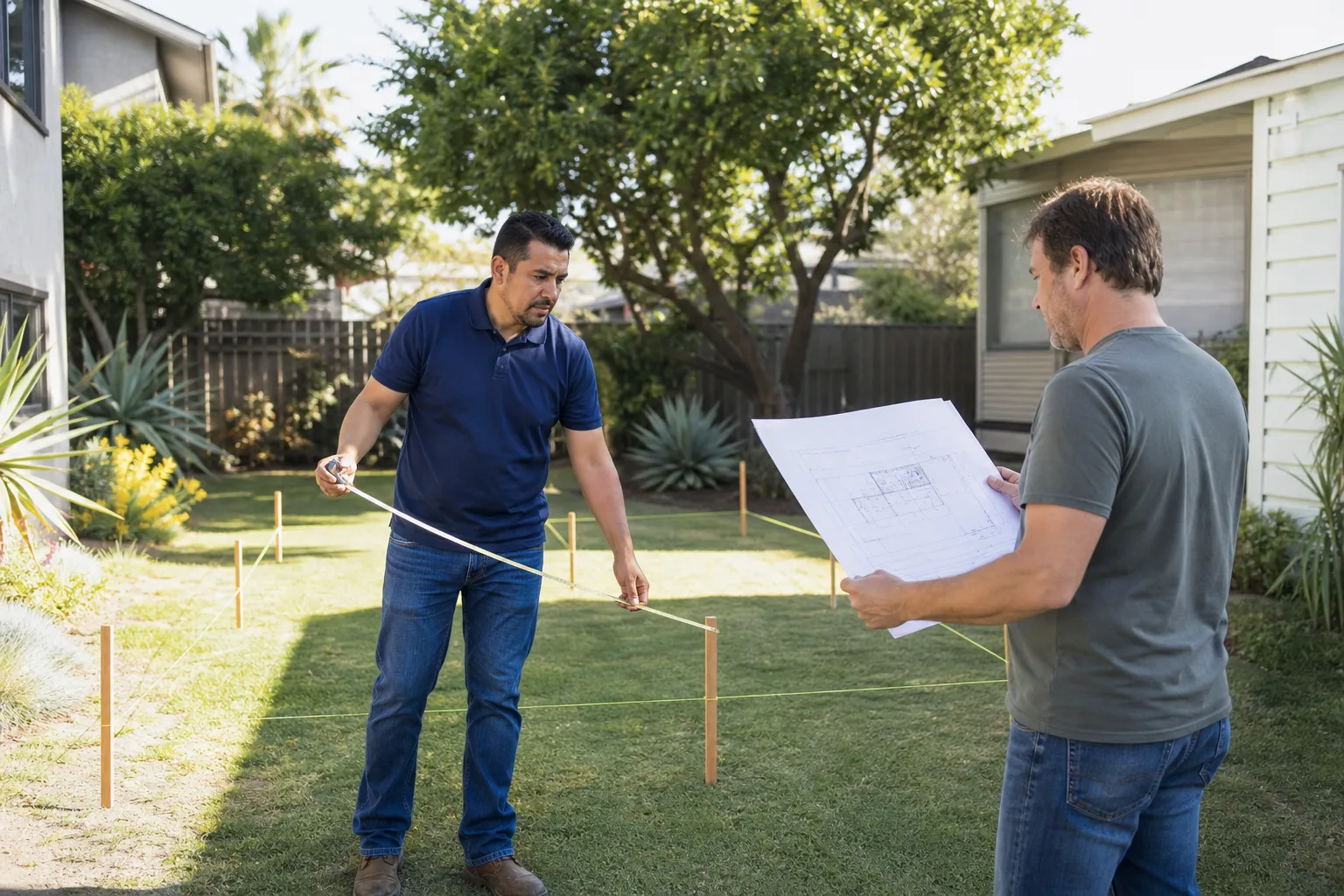
- Pre-application review: You meet with city planners to confirm your property’s zoning, lot coverage limits, and whether your ADU fits within the state-mandated streamlining rules. Pasadena requires this step before full plan submittal.
- Plan preparation: You need full construction drawings, a site plan, structural calculations, and Title 24 energy compliance documentation. Most first-timers hire an architect or draftsperson here, which is already $8,000 to $20,000 before you’ve touched a hammer.
- Full plan submittal: The city reviews your plans for compliance with building code, zoning rules, and fire safety requirements. Expect the first response in 4 to 8 weeks.
- Plan check corrections: The reviewer returns a comment list. You respond, revise, resubmit. This cycle repeats until the plans are approved. Owner-builders average three cycles. Seasoned Pasadena ADU contractors average one, sometimes two.
- Permit issuance: Once plans are approved and fees paid, you’re clear to start construction. Permit fees for a Pasadena ADU typically run $8,000 to $15,000 depending on the project’s valuation.
- Construction and inspections: You build, and the city inspects at set milestones: foundation, framing, rough electrical, rough plumbing, insulation, final. Each inspection requires scheduling and your presence.
Total timeline from start to permit issuance for a committed owner-builder: 6 to 10 months. For a contractor with Pasadena experience: 3 to 6 months. That timeline difference is not about who is smarter. It’s about who has already made the mistakes and learned the city’s preferences. The ADU builders in Pasadena who do this work daily know what the plan reviewer wants to see before the reviewer asks for it. An owner-builder discovers what the reviewer wants by submitting and waiting.
Insurance and Liability: What Unpermitted DIY Work Actually Costs You
This is the section most DIY ADU articles skip entirely, and it’s the one that matters most if something goes wrong. The question isn’t just whether you can build it. It’s what happens to your financial position if the ADU fails, burns, floods, or injures someone.
Homeowner’s Insurance and Unpermitted Work
If you build an ADU without permits in Pasadena and later file an insurance claim related to that structure, the insurer has grounds to deny the claim on the basis that the work was illegally constructed. This isn’t a Pasadena-specific rule. It’s standard language in most homeowner’s policies across California. The insurer can point to the lack of permits and inspections as evidence that the work didn’t meet code, and a denied claim after a fire or water loss means you’re paying for the repair out of pocket on top of the original build cost.
Even if the claim is on the main house and not the ADU, an unpermitted addition can complicate the process. Some insurers will pay only the value of the permitted structure and exclude the unpermitted portion. Others will cancel the policy when they discover unpermitted work during the claims investigation. Pasadena property values mean most homeowners are carrying substantial insurance exposure, and an unpermitted ADU is a weak link in that coverage.
Worker Injury and Owner-Builder Liability
If you hire a day laborer or an unlicensed worker to help with demo or framing and that person is injured on your property, you as the owner-builder are the employer of record. You’re personally liable for medical costs, lost wages, and legal claims. Licensed contractors carry workers’ compensation insurance that absorbs this risk. You don’t, unless you buy a specific policy for the project, and most homeowners don’t know they need one until an injury happens.
Sale Disclosure and Market Value
When you sell a Pasadena home with an ADU built under an owner-builder permit, the buyer’s lender will want to see the permit history. The seller’s disclosure forms ask specifically about unpermitted work and owner-builder construction. Answering honestly can cost you a buyer or reduce your price. Answering dishonestly opens you to a lawsuit. Neither path is free. A permitted ADU built by a licensed contractor with a clean inspection record is a selling point. A self-built ADU with a checkered permit history is a negotiation liability.
The Hybrid Approach: A Workable Split for Hands-On Homeowners
All of the above doesn’t mean you should never pick up a tool on your own ADU project. The hybrid approach works, and we recommend it to Pasadena homeowners who genuinely enjoy the work and have the time. Here’s how to structure it correctly.
Step One: Let the Contractor Carry the Permit
Hire a licensed contractor to pull the permit and manage the structural phase. This means the contractor owns the relationship with the city, schedules the inspections, and is legally responsible for the work passing. You avoid becoming the builder of record while still participating in the parts you’re good at.
Step Two: Claim the Finish Work in Writing
When you sign the contract, put in writing which scope items you’ll perform yourself: painting, flooring, trim, fixtures, maybe the kitchen backsplash. Get the contractor to price the project without those items. Get the arrangement documented so there’s no dispute later about who was responsible for what.
Step Three: Sequence Your Work After the Contractor’s Phase
You don’t paint before the drywall mud is dry, and you don’t install flooring before the paint is done. Let the contractor complete the structural shell, rough mechanicals, drywall, and tape and texture. Then you come in for paint, flooring, trim, and finish details. This keeps you out of the contractor’s way and keeps the inspection schedule clean. The contractor returns for the final inspection once your finish work is done, and if you paid for that coordination in the contract, the contractor stands behind the whole assembly including your portion.
The Financial Logic of the Hybrid
You capture the $12,000 to $26,000 in legitimate DIY savings on finish work. The contractor carries the liability on the structural, electrical, plumbing, and HVAC work. You avoid the five-year owner-builder disclosure. You avoid the plan check learning curve. The project gets done in 4 to 6 months instead of 10. For a homeowner who wants to be involved without becoming the builder of record, this is the arrangement that actually works. This is also the arrangement the team at Fielding ADU Pasadena home services regularly, because we’ve found it’s what hands-on homeowners in Pasadena actually want once they understand the tradeoffs.
How to Choose a Contractor If You Decide Not to DIY
If you read this far and concluded that professional management is the right call for your Pasadena ADU, the next question is who. This is where the Garrison Standard matters, and it’s worth explaining what that means in practice.
The Garrison Code is five commitments that govern how we run every ADU project: show up in the window, price in writing, build by the book, leave it clean, and stand behind it for a year. The pricing commitment is the one that matters most to homeowners who’ve been burned. Before any work starts, you receive a written price. That number is the number on the final invoice, with no change orders unless you change the scope. The one-year guarantee is written, not verbal: if something fails within 365 days, we return and correct it at no charge. That’s the room addition contractor in Pasadena standard, applied to ADUs.
When you compare contractors, ask three questions and don’t accept vague answers. First: will you put the price in writing before we sign? Second: what does your written warranty cover, and for how long? Third: who exactly will be on my property and are they background-checked? Most contractors fumble one of those three. The ones who answer cleanly are the ones worth your time.
We also work with specific prefab and modular platforms because Pasadena lots vary widely, and one build method doesn’t fit every parcel. For tight lots with difficult access, a factory-built ADU from a company like Dvele or Plant Prefab can make sense. For homeowners wanting speed and predictability, Mighty Buildings panels reduce on-site framing time. We don’t push any single platform. We match the method to the lot, the budget, and the timeline. The same applies to conventional construction using James Hardie siding and standard stick framing. The point is fluency with the options, not loyalty to one.
Common Mistakes to Avoid
- Starting demolition before the permit is issued. In Pasadena, the building department treats unpermitted work as a code violation, and starting early can complicate your permit application and generate fines. The permit must be in hand before the first swing of the hammer.
- Assuming owner-builder means “you can do everything.” Electrical, plumbing, and HVAC still require licensed professionals. If you touch those systems yourself, you’re building a permit and insurance liability problem.
- Underestimating plan check time. Pasadena’s plan check is thorough and not fast. First-time owner-builders routinely lose 3 to 4 months to revisions they didn’t anticipate. Build that into your schedule before you tear anything apart.
- Hiring the cheapest subcontractor to save a few thousand dollars. The cheap electrician is cheap because he doesn’t carry proper insurance or because his work fails inspection. Either way, you pay twice.
- Not documenting the scope split in a hybrid arrangement. Verbal agreements about who paints the bedroom and who installs the baseboards dissolve into disputes. Write it down.
- Forgetting that unpermitted work follows you to the sale. Even if the ADU turns out great, the day you sell you’ll be explaining the permit history to a buyer’s lender. That’s a conversation you don’t want to have.
- Building backward: finish choices before structural plans. Pasadena homeowners sometimes pick flooring and paint colors before the plans are approved. Finish decisions matter, but they’re the last thing, not the first. Get the plans approved first.
When to Call a Professional
Call a licensed contractor if your ADU involves structural changes to the existing home, a new foundation, utility work beyond a simple extension, or if you’re on a timeline that matters to you. If you’ve been through a plan check cycle and your drawings still aren’t approved, that’s the moment to stop spending revision fees and bring in someone who has been through the Pasadena process before. If you value a clean permit history for resale, that’s also a reason to hire. If you want to do the finish work yourself and hand the liability to someone else, that’s a conversation we have regularly. Garage conversion contractors in Pasadena understand that split because a garage conversion is the most common hybrid project in this city. Fielding ADU Pasadena offers free estimates in Pasadena. Call (626) 657-5541 and we’ll walk through your lot, your plans, and your options with a written price before any commitment.
Frequently Asked Questions
Yes, California law allows you to act as your own general contractor on an ADU on your own property, but you must pull permits, pass the same inspections as a licensed contractor, and hire licensed electricians, plumbers, and HVAC technicians for those specific trades. You also sign a disclosure statement that may affect future sale of the property.
A DIY-managed ADU in Pasadena typically costs $120,000 to $180,000 in materials, permit fees, and licensed subcontractor labor, compared to $180,000 to $260,000 for a contractor-built unit. The gap widens or narrows depending on plan check revisions, inspection failures, and material waste, which first-time owner-builders experience at higher rates.
You can do demolition, painting, flooring installation, finish carpentry, and general labor without a license. Electrical, plumbing, and HVAC work must be performed by licensed C-10, C-36, and C-20 contractors respectively, regardless of owner-builder status.
Yes. Unpermitted work gives your insurer grounds to deny claims related to the ADU, and in some cases to cancel the policy entirely. Permitted work done by a licensed contractor with a clean inspection record keeps your coverage intact and is a selling point rather than a liability at resale.
Plan check for a Pasadena ADU typically takes 4 to 8 weeks for first review, and the full process from submittal to permit issuance averages 3 to 6 months for experienced contractors and 6 to 10 months for first-time owner-builders navigating the revision cycles alone.
Yes, and this hybrid approach is common in Pasadena. You work out a written scope split before the project starts, typically with the contractor handling the structural and utility work and you taking on paint, flooring, and trim after the drywall phase. The key is documenting the split so the inspection sequence stays clean and the warranty stays intact.
The Bottom Line
The DIY-versus-professional question for a Pasadena ADU is not a test of your competence. It’s a risk calculation. The savings that look real at first glance shrink when you factor in plan check revisions, inspection failures, material waste, and the insurance exposure that comes with being the builder of record. The workable middle ground is the hybrid approach: let a licensed contractor carry the permit, the liability, and the structural phase, and claim the finish work for yourself. That captures the legitimate savings while avoiding the expensive mistakes. Pasadena’s process rewards experience, and the difference between three plan check cycles and one is the difference between a project that finishes in one season and one that drags through two. Understand that tradeoff clearly and the decision makes itself.
Written by Reed Calloway, Owner at Fielding ADU Pasadena, serving Pasadena since 2006.