Last updated October 15, 2026
The Complete Guide to ADU in Pasadena
Pasadena has at least four distinct zoning overlays where a standard ADU plan that sails through in Monrovia gets sent back for redesign. Bungalow Heaven, the Garfield Heights Landmark District, and several hillside zones each carry their own setback rules, design review triggers, and utility requirements. Most “Pasadena ADU guides” don’t mention a single one of them. This guide names every hurdle, in the order you’ll actually hit it, so you know what you’re signing up for before money changes hands.
Quick Answer
Building an ADU in Pasadena typically costs between $180,000 and $420,000 for a detached unit, with permit fees, school district fees, and PWP utility connection costs adding roughly $15,000 to $40,000 on top. You’ll need to clear plan check with the city’s Design and Historic Preservation department if your property sits in a landmark district or hillside overlay, and the full timeline from first drawings to final inspection usually runs 10 to 18 months.
Table of Contents
- Pasadena’s ADU Ordinance vs. State Law: Where City Rules Win
- Historic Districts and Design Overlays: Bungalow Heaven and Beyond
- The Actual ADU Approval Sequence in Pasadena
- PWP Utility Connections: Why Pasadena Water and Power Changes the Math
- Common Reasons Pasadena ADU Applications Get Rejected at Plan Check
- What an ADU Actually Costs in Pasadena: Real Numbers
- Build Methods: Prefab Panels, Modular, and Conventional Construction
- Common Mistakes to Avoid
Pasadena’s ADU Ordinance vs. State Law: Where City Rules Win
California state law, specifically Government Code Section 65852.2, sets minimum standards for Accessory Dwelling Units that every city must follow. Pasadena has adopted these baseline rules but added its own layer of requirements that frequently surprise homeowners who’ve done their research on state law alone.
The state mandates that cities approve ADUs on any lot zoned for single-family or multifamily residential use, that ADUs under 800 square feet be exempt from lot coverage rules, and that setback requirements be limited to 4 feet for side and rear yards. Pasadena complies with all of this. Where Pasadena differs is in its design review process and its historic district overlays.
Here’s what Pasadena enforces beyond the state minimums:
- Design review approval for any ADU visible from the public right-of-way in a landmark district or hillside overlay. State law allows review, but Pasadena actually staffs it with design professionals who issue written findings. Monrovia does not have this layer for standard lots.
- Front yard restrictions that remain tighter than state baseline in certain neighborhoods. State law says you can’t be forced to place an ADU behind the rear building line, but Pasadena’s zoning code still lists front-yard encroachment restrictions that apply in specific zones.
- Trees and protected specimens: Pasadena has stricter native tree protection than nearby cities. A mature coast live oak or sycamore within the proposed ADU footprint can trigger an arborist report and a redesigned foundation plan before plan check clears.
- Garage conversion replacement parking: Pasadena follows state law exempting parking replacement for ADUs within half a mile of transit, but older single-family neighborhoods more than half a mile from a Metro or Foothill Transit stop may still need a carport or modified parking plan depending on the zone.
We’ve worked on ADUs in Pasadena where the state checklist said everything was compliant, and the city still sent drawings back three times for revisions on exterior materials and window placement. That does not happen in most of LA County. It happens here because the Design and Historic Preservation division has actual teeth in specific overlay districts.
Historic Districts and Design Overlays: Bungalow Heaven and Beyond
Pasadena is one of the few cities in Southern California where a neighborhood’s historic character is a binding legal layer, not a suggestion. Four distinct overlay districts affect ADU design, and knowing which one covers your property changes everything about what you can build and how it must look.
Bungalow Heaven Landmark District covers roughly 1,100 properties north of the 210 freeway between Lake and Hill avenues. Any ADU visible from the street here must receive a Certificate of Appropriateness from the Historic Preservation Commission before building permits are issued. The commission reviews massing, roof pitch, window proportion, and exterior finish materials. A standard shed-roof ADU with aluminum windows that passes in Pasadena’s non-historic neighborhoods will be rejected here. We’ve seen homeowners lose six to eight months redesigning after their first submittal because no one told them the overlay applied.
Garfield Heights Landmark District, south of the 210 near Orange Grove Boulevard, operates the same way, though the commission typically focuses more on street-facing elevation details than rear yard placement.
Hillside Overlay Districts in the San Rafael Hills and the Linda Vista area add slope-density rules and grading review on top of standard ADU requirements. If your lot has a slope over 15%, expect a soils report and a grading plan before plan check completes. This adds roughly $4,000 to $9,000 in engineering costs and several weeks of review time.
Neighborhood Design Overlays, such as the one covering portions of Madison Heights, require that detached ADUs match the architectural character of the primary residence in roof form and exterior cladding. You’ll see “character-defining features” language in your plan check comments. That means the ADU cannot be a simple rectangular box if the house is a Spanish Colonial Revival with a clay tile roof.
The practical takeaway: before you pay a designer for drawings, confirm with the city’s Planning and Community Development counter which overlay applies to your parcel. Better yet, request a Zoning Verification Letter in writing. It costs under $100 and prevents the most expensive mistakes we see in Pasadena.
If you’re also considering a garage conversion in Pasadena, the overlay review is often lighter for interior conversions, but any added square footage visible from the street still triggers design review in landmark districts.
The Actual ADU Approval Sequence in Pasadena
Pasadena’s process moved to an online-only submittal system several years ago, which eliminated the old counter drop-off. The sequence still follows the same steps, but the bottlenecks have shifted. Here’s the order of operations, based on the projects we’ve shepherded through this exact pipeline.
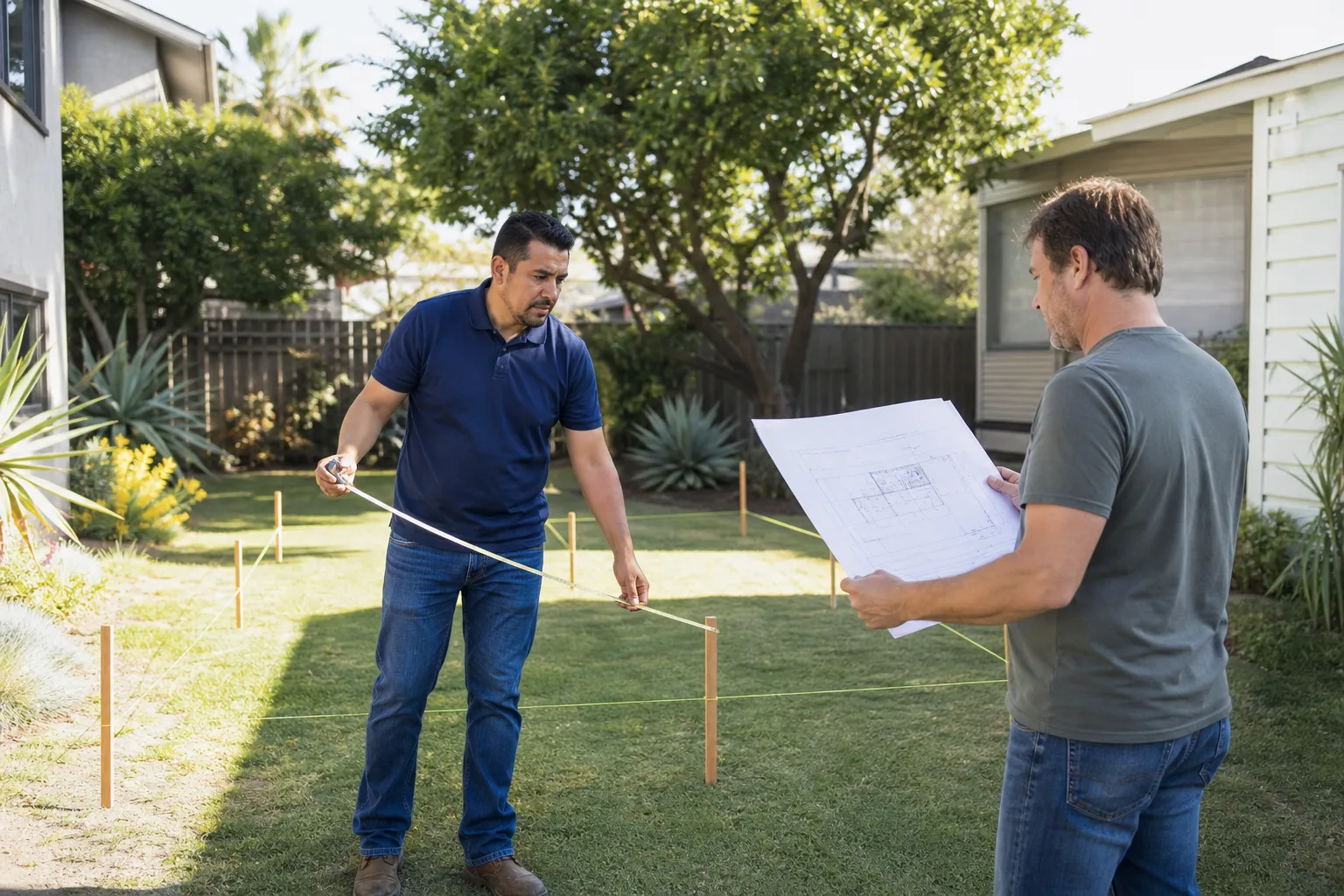
- Pre-application meeting: Optional but recommended for any property in a landmark district or hillside overlay. You meet with a planner who can flag the design review triggers before you spend money on drawings. Schedule this through the Permit Center’s online booking system. Cost is usually free, but wait times can run three to four weeks in peak season.
- Zoning verification: Request the parcel’s overlay status, development standards, and ADU eligibility in writing. This takes one to two weeks and is the document that protects you if plan check comes back with surprise requirements.
- Design and architect drawings: Allow four to eight weeks for a competent designer who has done Pasadena ADUs before. If your property is in Bungalow Heaven or Garfield Heights, add another two to four weeks for materials boards and elevation studies prepared to the commission’s standard.
- First plan check submittal: Upload through the city’s electronic portal. Current first-pass review times run four to six weeks. You’ll receive a written correction list if anything fails.
- Corrections and resubmittal: Address every comment in writing. Each correction cycle costs another two to four weeks of staff time. Most ADUs clear plan check after two or three cycles. Budget for that reality.
- Historic review (if applicable): Bungalow Heaven and Garfield Heights ADUs go to a public hearing with the Historic Preservation Commission. The hearing is scheduled after plan check comments are cleared. Commission meetings are monthly, so timing your resubmittal wrong costs a month.
- Building permit issuance: Once plan check clears and fees are paid, the permit is issued. This is when you’ll pay school district impact fees (currently around $4.50 per square foot for residential additions) and PWP connection fees, which we cover below.
- Construction and inspections: Foundation, framing, rough electrical, rough plumbing, insulation, drywall, and final inspections. Expect 8 to 12 months of construction for a detached ADU of 600 to 1,000 square feet.
Total timeline from first designer call to final inspection: 10 to 18 months in Pasadena. Anyone quoting you a four-month build is quoting a timeline that has never survived plan check in this city.
For a broader look at how this compares to other additions, see our guide to choosing a room addition contractor in Pasadena, where we break down the same process for attached square footage.
PWP Utility Connections: Why Pasadena Water and Power Changes the Math
Pasadena Water and Power is a city-owned municipal utility. That makes the ADU utility process here different from LADWP-served properties in neighboring cities like Altadena and San Marino. The difference comes down to fee structure and inspection sequencing.
PWP water connection fees for a new ADU typically run $6,000 to $14,000 depending on meter size and whether a new service line is required. That’s the hookup cost alone, before trenching, backflow prevention device installation, and plumbing labor. On an LADWP property, a new 3/4-inch or 1-inch domestic meter connection often falls in a similar range, but the approval process moves faster, and the agency does not require the same level of as-built documentation that PWP does.
PWP electrical service upgrades are the hidden cost most first-time ADU builders miss. If your existing panel is 100 amps, and the ADU adds a full kitchen, mini-split heat pump, and laundry, you’ll likely need a 200-amp panel upgrade and possibly a new underground service lateral. PWP reviews the load calculation as part of the permit process and issues a separate “will-serve” letter before the city will sign off on the building permit. That letter alone can take two to four weeks to obtain.
Gas connections are simpler only if the ADU is designed as all-electric. Many Pasadena homeowners are choosing all-electric ADUs built to Title 24 Part 6 solar-ready standards, in part because avoiding a new gas service tap saves $2,000 to $4,000 in fees and eliminates one entire inspection category.
We also see homeowners surprised by sidewalk and driveway restoration requirements when trenching crosses the public right-of-way. PWP does not allow a simple asphalt patch; the city requires full-width sidewalk panel replacement for any cut longer than four feet. That’s a $1,500 to $3,500 line item most budgets don’t include.
No field guide to ADU builders in Pasadena can give you a fixed utility number without looking at your specific meter location and panel capacity. But the ranges above are close enough to set your budget expectations realistically.
Common Reasons Pasadena ADU Applications Get Rejected at Plan Check
Plan check corrections in Pasadena are formulaic. The city’s plan checkers follow a written deficiency list, and certain comments appear on nearly every first submittal. We’ve sorted the most common ones, along with how to prevent them before you ever upload drawings.
- Missing 24-inch by 36-inch architectural title sheet with zoning data block: Pasadena requires a specific title sheet format that many out-of-area designers omit. The sheet must show the parcel number, zone district, overlay district, building code edition (currently 2022 California codes with Pasadena amendments), occupancy classification, and fire sprinkler placeholder if applicable.
- Incomplete energy compliance documentation: Title 24 Part 6 energy modeling must be generated by a certified CalCERTS or CHEERS provider and stamped on every plan sheet. Hand calculations are not accepted.
- Fire separation requirements not noted: Detached ADUs within 5 feet of the primary dwelling need a one-hour fire-rated wall assembly on the facing elevation. Less than 5 feet is non-conforming and will not be approved in most Pasadena zones.
- Landscaping and tree protection plan missing: Pasadena Municipal Code requires a landscape plan sheet showing tree protection zones for any tree over 6 inches in trunk diameter within 15 feet of construction. Mature oaks and sycamores get extra scrutiny.
- PWP will-serve letter not attached: For any ADU with a new or upgraded water or electrical service, PWP’s approval letter must be part of the first submittal. Submitting without it earns an automatic “incomplete” designation and a two-week delay.
- Street-facing elevation not drawn for landmark districts: In Bungalow Heaven and Garfield Heights, the ADU’s street-facing elevation must be drawn at 1/4-inch scale with material callouts, window mullion details, and roof pitch dimensions. Omitting this sheet is the single most common rejection in historic overlays.
We’ve cleared plan check on first submittal only a handful of times. But the projects that get rejected once instead of three times are the ones where the designer knew the city’s deficiency list cold before making the first drawing.
What an ADU Actually Costs in Pasadena: Real Numbers
Cost is the first question every Pasadena homeowner asks, and most online answers are either too vague or too optimistic. Here are the numbers we’ve seen on actual projects in this city over the past several years, including fees most guides leave out.
| Line Item | Typical Range | Notes |
|---|---|---|
| Design and engineering | $8,000 – $18,000 | Architect or designer, structural engineer, Title 24 energy consultant, soils report if hillside |
| City plan check and permit fees | $6,000 – $12,000 | Includes plan check review, building permit fee, and any historic review hearing fees |
| School district fees | $2,500 – $5,500 | Pasadena Unified School District impact fees, based on square footage |
| PWP water connection | $6,000 – $14,000 | New meter or upsized service, plus backflow prevention device |
| PWP electrical service upgrade | $3,500 – $7,000 | Panel upgrade to 200 amps and new underground lateral if required |
| Construction: detached stick-built ADU | $250 – $350 per sq ft | 600 sq ft = $150,000 – $210,000. Includes foundation, framing, MEP, finishes |
| Construction: garage conversion | $120 – $200 per sq ft | 400 sq ft = $48,000 – $80,000. Lower because shell exists, but structural upgrades may apply |
| Prefab or modular ADU panels | $220 – $300 per sq ft delivered and set | Does not include site work, foundation, or utility connections |
Total cost for a 600-square-foot detached ADU in Pasadena, complete with permits, fees, and utilities: roughly $190,000 to $280,000 for conventional construction. A 400-square-foot garage conversion runs $70,000 to $120,000 including fees. A 1,000-square-foot two-bedroom ADU with a full kitchen and laundry pushes $320,000 to $420,000.
These are Pasadena-specific numbers. The filing fees, the PWP costs, and the design review overhead all add cost here that you would not pay in Monrovia or Arcadia on the same floor plan.
We put our prices in writing before any work starts on every project we build. That’s the Garrison Standard we’ve held since 2006, and it means the number you approve is the number on the final invoice. For a full breakdown of how we price, see the Fielding ADU Pasadena home page or call us for a written estimate.
Build Methods: Prefab Panels, Modular, and Conventional Construction
Pasadena homeowners have three realistic paths for ADU construction, and the right one depends on your budget, your site access, and whether you’re in a historic district where exterior appearance gets extra scrutiny. See our DIY vs Professional ADU: The Pasadena Homeowner’s Decision Guide to help choose the best approach.
Panelized prefab ADUs from companies like Abodu, Cover, and Dvele have gained real traction in Pasadena over the past five years. These are not mobile homes; they arrive as pre-finished wall panels, roof cassettes, and window systems that assemble on-site in two to four weeks after the foundation is placed. Prices for a 450-to-600-square-foot one-bedroom unit typically run $180,000 to $260,000 including delivery, assembly, and factory finishes, but excluding site work, foundation, and PWP connections. Abodu in particular has built several units in Pasadena near the northwest neighborhoods, and their standard plan has passed plan check here multiple times, which shortens your design timeline by weeks.
Modular ADUs arrive as three-dimensional boxes set by crane. This method works well for flat lots with wide side-yard access, and companies like Mighty Buildings offer composite-panel units assembled with far less on-site labor than stick framing. In Pasadena, crane placement requires a separate right-of-way permit and traffic control plan if the crane swing crosses the public street. Budget an extra $2,000 to $4,000 for that process. Modular also hits a wall in Bungalow Heaven, where the Historic Preservation Commission generally will not approve a factory-built box without significant exterior modifications to match the district’s bungalow character.
Conventional stick-built construction remains the majority of Pasadena ADUs. It gives you unlimited design flexibility, which matters when a design review board is commenting on your roofline, and it allows local subcontractors to sequence work around the city’s inspection schedule without factory lead times. The tradeoff is time: a stick-built ADU takes longer on-site than prefab, and the weather exposure period in winter months can slow finish work. If you use James Hardie siding, as we do on most of our conventional builds, the material holds up to Pasadena’s dry heat and intermittent winter rain better than fiber cement alternatives from big-box stores.
There’s also a smaller category: Tuff Shed-style converted structures. These are legal only if brought fully up to California residential building code for insulation, electrical, plumbing, and foundation, which usually costs more than starting with a purpose-built ADU plan. We rarely recommend this path unless the lot has unusual constraints that rule out everything else.
Common Mistakes to Avoid
- Buying a pre-approved ADU plan before checking your overlay district. A plan that’s “approved” by the state or another city means nothing in Bungalow Heaven. Check your overlay first, then choose a plan.
- Budgeting LADWP connection fees instead of PWP fees. Pasadena Water and Power has its own fee schedule and its own approval process. If your budget was built on an LADWP property estimate, it’s likely low by $5,000 to $10,000.
- Skipping the pre-application meeting in a landmark district. The planner will tell you in thirty minutes whether your design direction will pass the Historic Preservation Commission. Skipping that meeting and submitting drawings blind is the most expensive mistake we see.
- Assuming garage conversions are always cheaper per square foot. In Pasadena, some pre-1950s garages have unreinforced foundations and substandard framing that trigger full structural retrofit requirements. Get the existing structure evaluated before you commit to conversion pricing.
- Designing the ADU without accounting for the primary residence’s electrical panel location. A new underground lateral across a 60-foot lot can add $4,000 to $8,000. The panel location question should be answered before the foundation is designed.
- Signing a construction contract without a written price and a written change-order policy. Any contractor who won’t put the full price in writing before work starts is planning to discover “unforeseen conditions” at your expense. The Garrison Code exists for a reason: price in writing, by the book, leave it clean, stand behind it for a year.
- Ignoring the school district fee line item. Pasadena Unified collects impact fees on residential additions at permit issuance. It’s a small percentage of the total, but it’s due before your permit is released, and many budgets don’t account for it.
When to Call a Professional
Some parts of a Pasadena ADU project are DIY-adjacent: painting, finish hardware, maybe cabinet installation if you’re skilled. The structural, electrical, plumbing, and site-work phases are not. California Building Code requires licensed contractors for any work involving structural framing, electrical service, gas piping, or water supply lines. In a city with the level of plan check scrutiny Pasadena applies, an unpermitted ADU built by a handyman becomes a liability when you sell, refinance, or get noticed by a building inspector. If your project is in a historic district, or involves trenching to a new PWP meter, or requires grading on a hillside lot, hire a licensed contractor who has actually built in Pasadena. Our How to Hire a ADU Contractor in Pasadena: A Step-by-Step Guide walks you through exactly what to look for. Fielding ADU Pasadena offers free estimates in Pasadena. Call (626) 657-5541, and we’ll walk the site, confirm your zoning overlay, and hand you a written price with no obligation.
Frequently Asked Questions
A detached ADU in Pasadena typically costs $190,000 to $420,000 depending on size, build method, and utility requirements, including design, permits, PWP fees, and construction. After move-in, protect your investment with our Room Addition Contractor Maintenance Checklist for Pasadena Homeowners. A 400-square-foot garage conversion runs $70,000 to $120,000 all-in. Call (626) 657-5541 for a written estimate specific to your lot.
Yes, Pasadena allows ADUs in historic districts like Bungalow Heaven and Garfield Heights, but any unit visible from the street must receive a Certificate of Appropriateness from the Historic Preservation Commission. The design review process adds two to six months to the timeline and requires exterior materials and roof forms that match the district’s character.
Expect 10 to 18 months from the first designer meeting to final inspection. Plan check alone typically takes two to three correction cycles over four to six months. Historic district review adds time on top. Construction of a stick-built detached ADU usually runs 8 to 12 months.
State law, which Pasadena follows, permits detached ADUs up to 1,000 square feet regardless of the primary residence’s size. Attached ADUs can be up to 50% of the existing home’s square footage, up to 1,200 square feet. However, design overlays and historic districts can require smaller footprints or specific placements.
Yes, but not by the full construction cost. The Los Angeles County Assessor revalues the property at the ADU’s added value only, not the entire improved value of the home. Expect an incremental increase based on the assessed value of the new square footage, which the county calculates using a cost approach, not market sale price.
Yes, if the ADU needs a new water meter, upsized electrical service, or a new underground lateral, you’ll need a will-serve letter from Pasadena Water and Power before the building permit is issued. The letter confirms PWP can supply the service at the proposed capacity. Plan check will reject a submittal that lacks it. Call (626) 657-5541 if you’re unsure whether your project triggers the PWP requirement; we can confirm it in one site visit.
The Bottom Line
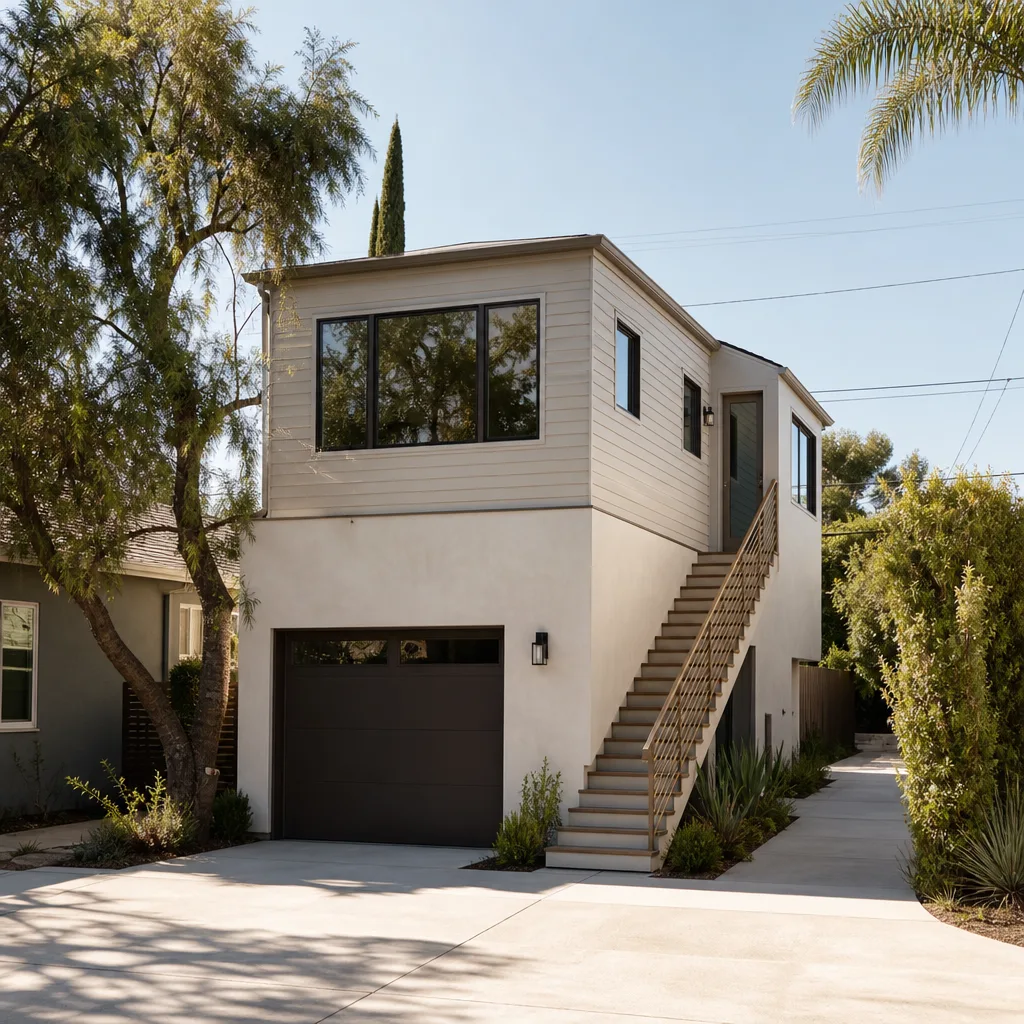
Pasadena makes ADU construction possible, but it does not make it simple. The city’s design review overlays, PWP utility process, and plan check deficiency list are specific to this place, and they add cost and time that generic ADU guides don’t account for. If you know your overlay district before you draw, if you budget PWP fees from day one, and if you hire a contractor who has cleared Pasadena plan check on real projects, the process becomes manageable. That’s what we’ve done since 2006, and it’s what we’ll keep doing. Fielding ADU Pasadena builds to the Garrison Standard: price in writing, permitted work, clean site, and a 365-day written guarantee. Call (626) 657-5541 to schedule your free on-site estimate and get a written price for your project.
Written by Reed Calloway, Owner at Fielding ADU Pasadena, serving Pasadena since 2006.