Last updated October 15, 2026
ADU Permits, Codes & Inspections in CA: What You Need to Know
California’s accessory dwelling unit laws have been rewritten four times since 2017, and a surprising number of people still operate on the 2016 rulebook. We meet Pasadena homeowners every month who were told by a contractor, a neighbor, or occasionally a city employee that their ADU is dead on arrival because of parking, setbacks, or owner-occupancy rules that the state legislature eliminated years ago. This complete guide to ADU in Pasadena walks through what the current law actually says, where cities still have authority, why some jurisdictions push back anyway, and what to expect at each inspection. By the end, you will know more about ADU permitting than most people who build them for a living.
Quick Answer
Under current California law, a city must approve a compliant ADU application within 60 days through a ministerial process that removes most discretionary review, parking mandates, and owner-occupancy requirements. Cities cannot reject a conforming ADU over parking, many setback rules, or a demand that the owner live on-site. Local agencies can still enforce building codes, fire safety standards, and specific historic district rules.
Table of Contents
- What AB 68, AB 881, SB 9, and AB 2221 Changed
- The 60-Day Ministerial Approval Rule
- Ministerial Approval vs. Design Review: Where Cities Still Have a Say
- The Three Inspection Stages: Foundation, Framing, Final
- How to Legalize an Unpermitted ADU Conversion
- What ADU Permits Actually Cost in California
- What Pasadena Homeowners Should Know
- Common Mistakes to Avoid
What AB 68, AB 881, SB 9, and AB 2221 Changed
Most homeowners hear about ADU reform as a blur of bill numbers. The practical effect is simpler than the legislative language suggests: each of these laws stripped away a specific power that cities used to delay, shrink, or kill ADU projects. Here is what each one did.
AB 68 (2020) eliminated parking requirements for ADUs located within a half-mile of public transit and capped parking at one space per unit everywhere else. It also removed owner-occupancy requirements entirely through 2025, meaning a homeowner could rent both the main house and the ADU without living on the property. That owner-occupancy sunset has since been extended. AB 68 also forced cities to act on applications within 60 days and banned local agencies from requiring setbacks on a conversion of an existing structure like a garage if the structure was already in place.
AB 881 (2020) removed a city’s ability to demand a minimum lot size for ADUs or enforce setback rules on existing structures being converted. Before AB 881, a Pasadena homeowner converting a garage that sat three feet from the property line could be told to tear it off and rebuild it with the standard five-foot setback. That demand is now illegal. The structure that exists gets to stay where it is, as long as it meets basic building safety codes.
SB 9 (2021) is technically a lot-split and duplex law, but it affects ADUs in one important way. A homeowner with a single-family lot can now split the lot and build up to two units on each parcel, plus one ADU per unit. That means a single California lot can now legally yield up to four dwellings under the right conditions. Cities cannot use zoning designations to block a lot split that meets the state’s lot size, floor area, and rental-term requirements.
AB 2221 (2022) is the cleanup bill that closed loopholes cities were using to stall approvals. It clarified that “objective” standards must be enforced as written, not reinterpreted by a planner who dislikes the project. It also established the legalization pathway for unpermitted ADUs built before 2020, which we cover in detail below. The core message of AB 2221 is that a city’s subjective judgment call is not a valid reason to deny an ADU permit.
We have built ADUs in Pasadena under all four of these laws, and the biggest shift we have seen is at the counter. Plan checkers and planners who once treated ADUs as a favor to be lobbied for now process them as a matter of right. The law changed more than the paperwork. It changed the posture.
The 60-Day Ministerial Approval Rule
California Government Code Section 65852.2 requires cities to act on a complete ADU application within 60 days. That is not a suggestion tucked into state housing guidance. It is a mandatory deadline with legal teeth. Here is how the clock works and what to do when the city ignores it.
When the clock starts
The 60-day timer begins when the city deems your application complete, not when you first submit it. This distinction matters because some cities use the completeness review itself as a delay tactic. A local agency must complete its completeness determination within 30 days of submission. If the city takes 45 days to say your application is complete, that is a violation on its own, and the state Department of Housing and Community Development (HCD) has made clear that the 60-day clock starts retroactively at 30 days in those cases.
What “ministerial” means in practice
A ministerial approval is a rubber-stamp process. The city checks your plans against an objective checklist: floor area ratio, height limit, fire separation, structural requirements, energy code. If the boxes check, the permit issues. No public hearing. No planning commission vote. No neighbor notification period where objections can be lodged. In Pasadena, we have seen a complete garage conversion application go from submission to issued permit in under three weeks when the drawings were clean.
What to do if the city misses the deadline
- Put it in writing. Send an email to the planning department referencing Government Code 65852.2 and the date your application was deemed complete. Request written confirmation that the 60-day deadline has passed.
- Escalate to HCD. The state housing department maintains a complaint process for cities that violate ADU law. The complaint takes 15 minutes to file online, and HCD’s involvement tends to change a city’s posture quickly.
- Retain a local permit expediter. Sometimes a person who knows the county Building and Safety staff personally can unwind a stall faster than a lawyer can. This is not legal advice, but in our experience a competent expediter is the fastest path to an issued permit.
- Get counsel. California has multiple land-use attorneys who take ADU delay cases on flat fees. A letter from counsel citing the city’s exposure to attorney fees under state housing law is often the last letter needed.
The important thing to understand is that you have rights in this process, and the city’s failure to act is not a private problem you need to absorb. The law was written to make refusal and inexcusable delay expensive for the city.
Ministerial Approval vs. Design Review: Where Cities Still Have a Say
The state stripped away most discretionary review, but not all of it. Understanding the line between what a city must approve and what it can still scrutinize will save you from a permit fight you cannot win.
What is ministerial and cannot be denied
- Zoning compliance. If your ADU meets the state’s floor area standards (1,200 square feet max, or 850 square feet for a one-bedroom, or 1,000 square feet for a two-bedroom ADU, subject to local caps), the city must allow it.
- Building code compliance. Structural, electrical, plumbing, and mechanical codes are objective standards. Pass them and you pass.
- Fire safety. Fire-rated separation between the ADU and the main house, access for the fire department, and egress windows are all objective requirements.
- Environmental health and safety. A dilapidated garage on a slab with un-reinforced footings will fail plan check, but that is a structural issue not a discretionary one.
Where design review can still apply
Design review still exists in California, but it is narrower than most homeowners assume. A city can impose design standards only if they are objectively written (no “harmonious character” language), do not constrain the size or height allowed by state law, and are limited to specific historic districts or designated historic properties. The city of Pasadena does apply additional review in its designated historic districts, and that review can add weeks to the process. Outside those districts, Pasadena processes ADUs ministerially.
The line worth knowing: a city can say “your window trim must be white or gray in this district,” but it cannot say “your window proposal is out of character with the block.” The first is objective. The second is the kind of subjective judgment call that AB 2221 made explicitly illegal.
The Three Inspection Stages: Foundation, Framing, Final
The permit is issued. The plans are stamped. Now the county or city building official shows up at your job site, and the work either passes or it does not. Here is what happens at each of the three main inspection points, and what the inspector is actually looking for. This applies to a standard stick-built ADU in Pasadena; a prefab unit from a manufacturer like Boxabl or Plant Prefab may consolidate some of these inspections depending on the factory certification.
Stage 1: Foundation inspection
The foundation inspection happens after the forms are set and the reinforcement steel is tied, but before concrete is poured. The inspector is checking three things: the footing depth against the approved plans, the width of the footings, and the steel placement. In Southern California, where expansive clay soils run through much of Pasadena, the inspector is also confirming that the geotechnical recommendations were followed, which sometimes means over-excavation and recompaction. We have seen foundation warning signs in Pasadena when the contractor skipped the certified soil compaction test, which the plan specifically called for. That fix costs a full day and a full re-inspection fee.
Stage 2: Framing inspection
Framing is the most detailed inspection. The inspector walks the entire structure with the plans in hand: stud spacing, header sizes over window and door openings, double top plates at wall intersections, anchor bolt spacing, shear panel nailing schedule, roof connection hardware, and the fire-rated separation between the ADU and the main dwelling. On a garage conversion, the framing inspection is where many old structures get exposed. A garage built in 1952 with 2×4 rafters at 24 inches on center may pass the visual first look, but the inspector will check span tables and often require engineered reinforcement that means new beams or a different roof structure. We tell our Pasadena clients to expect a corrections list after a framing inspection, even on a new build. It is the nature of the trade. The inspector finds something. We fix it. We call for re-inspection. That is the normal rhythm of a permitted job.
Stage 3: Final inspection
The final inspection is an occupancy and safety sign-off. The inspector confirms that the electrical panel is bonded and grounded, the GFCI and AFCI breakers trip properly, the water heater has a permit and a working temperature-pressure relief valve, the smoke and carbon monoxide alarms are interconnected and operational, and the egress windows open easily. On an ADU with a bedroom, the inspector verifies that the escape window meets minimum opening dimensions and maximum sill height. This is not a cosmetic review. The inspector does not care about paint color or cabinet pulls. The final is about life safety and habitability, and it is the last box before the certificate of occupancy and the city’s sign-off on the ADU as a legal dwelling unit.
How to Legalize an Unpermitted ADU Conversion
California has quietly created a legalization pathway for unpermitted ADUs, and most homeowners do not know it exists. AB 2221 codified the process, building on earlier work in the state’s housing law. If you own a home with a garage conversion or backyard structure that was built without permits, you may be able to bring it into compliance without demolishing it, and in some cases without meeting every current code requirement floor for floor. Here is how it works.
- Have the structure evaluated by a licensed architect or engineer. The city will not issue a legalization permit based on a contractor’s verbal assurance. You need a professional evaluation of the existing foundation, framing, electrical, plumbing, and mechanical systems. This is the document that tells the city what exists and what fails.
- Submit the legalization application to the city. Under current state law, cities may require code corrections for health and safety items (foundation, structure, fire separation, egress) but may not require you to bring non-safety items into current code. A legalized ADU does not need to meet the 2025 energy code if the walls were built in 2008. This distinction is where homeowners save real money.
- Complete the required corrections. In our experience with Pasadena legalizations, the list typically includes: fire-rated drywall at the ceiling, an egress window in the bedroom, a hardwired smoke alarm with a carbon monoxide detector, and a few structural upgrades if the foundation or roof framing is deficient. It rarely includes a full demo and rebuild.
- Pass the same three-stage inspection process outlined above. The city inspects the corrections, signs off, and issues a certificate of occupancy for the unit as a legal ADU.
- Record the legalization. The city’s final approval is recorded with the county, and the ADU becomes a legal, permitted unit. This matters when you sell, refinance, or insure the property.
The amnesty provisions are real, and they are not widely discussed. We have helped Pasadena homeowners legalize garage and backyard conversions that brokers said could never be permitted. The city does not have a vendetta against unpermitted ADUs. They have a code compliance process, and if you show up with engineered plans and a willingness to correct the safety items, the pathway is open.
What ADU Permits Actually Cost in California
Permit fees for ADUs in California vary by jurisdiction, and Pasadena sits in the middle of the range. Here is a straight answer for budgeting purposes. These figures are approximate and current as of this writing; always confirm with the building department for the latest fee schedule.
| Permit Category | Typical Cost Range |
|---|---|
| Building permit (plan check + issuance) | $2,500 – $6,000 |
| Electrical permit | $200 – $600 |
| Plumbing permit | $200 – $600 |
| Mechanical permit | $150 – $400 |
| School district fees (depends on district) | $1,000 – $4,000 |
| Utility connection fees (if new service) | $1,000 – $5,000 |
A garage conversion in Pasadena typically runs between $4,000 and $9,000 in permit and plan check fees before construction starts, depending on the scope of the electrical and plumbing work and the school district assessment. A detached new-build ADU runs higher, generally $8,000 to $15,000 in total permit and impact fees, with the school fees and utility connections driving most of the variance. For a more detailed look at Pasadena pricing, see our guide to ADU Builders in Pasadena, where we break down per-square-foot construction costs and what they include.
If you are converting an existing garage and want a full cost picture including design, structural reinforcement, and finishes, our Garage Conversion Contractor in Pasadena page goes through real project budgets, including what trades drive the most cost.
What Pasadena Homeowners Should Know
Pasadena has its own quirks inside the state framework, and a few of them change the math on an ADU project. The first is the city’s historic district overlay. If your home falls within one of Pasadena’s designated historic districts, the city applies additional review criteria, and those criteria are an allowed carve-out under state law. The review is still geared toward objective standards, but it adds time and sometimes adds design constraints that homeowners in non-historic parts of the city never face.
The second is the soil. Much of Pasadena sits on expansive clay, and the city’s plan checkers know it. Foundation plans that pass in other cities with a standard 12-inch footing may trigger a request for deeper footings or a certified soil report depending on the neighborhood. We see more geotechnical work required in Pasadena than in adjacent communities because the local building officials have lived through enough slab heave issues to be cautious. That is a legitimate safety standard, not a stall.
The third is the hillside overlay in parts of the city. Hillside ADUs trigger additional requirements for retaining walls, drainage, and emergency vehicle access. These are real constraints, and they should be factored into your early planning. The cost difference between a flat-lot ADU in the Condo Canyon area of downtown Pasadena and a hillside ADU in the San Rafael hills can be 30% or more, mostly in foundation and retaining work.
The fourth is speed. Pasadena’s planning department is adequately staffed and processes ADU applications ministerially for standard lots. We have not seen the kind of months-long stalls here that some neighboring cities are known for. A complete application with clean drawings gets an approval in under eight weeks in most cases.
If you are adding a room or an ADU and want the broader picture of the Pasadena market, including what gets approved and what gets flagged, start with the Fielding ADU Pasadena home page, which links to our service guides and pricing walkthroughs.
Common Mistakes to Avoid
- Believing a neighbor who says ADUs are not allowed. The neighbor learned ADU rules in 2015, or worse, never learned them at all. State law preempts local ordinances on nearly every substantive ADU question, and Pasadena’s municipal code has been updated to match. Your neighbor is wrong.
- Starting construction without a permit because you plan to legalize later. This is a real risk. An active code enforcement case changes the legalization math. Cities are more lenient with old, unpermitted work than with work currently under construction without permits. Do not build first and legalize second.
- Assuming a garage conversion cannot be permitted because the garage is too close to the property line. Under AB 881, setback rules do not apply to an existing structure being converted. The wall that has been three feet from the property line for 40 years stays there.
- Hiring an architect who has not done ADU work in Pasadena. An architect who knows the city’s plan checker preferences will save you two rounds of corrections. One who does not will cost you a month. We work with several Pasadena architects who have been through the local process repeatedly, and the difference in cycle time is measurable.
- Ignoring the school district fees in the budget. School fees hit every new ADU in some districts and can exceed $4,000. The city does not collect them, so they often never appear in early cost estimates. Your budget should include them as a separate line item.
- Thinking a prefab ADU skips the permit process. A modular ADU from a company like Plant Prefab or Abodu still requires a city building permit, a foundation permit, and utility connection approvals. The factory certification shortens the framing inspection path, but it does not eliminate the permit. A Tuff Shed-style structure used as living space, not just storage, goes through the same permitting process as any other ADU.
When to Call a Professional
If any of these conditions apply to your project, you should bring in a licensed professional rather than navigating the permit process solo. First, if your property is in a Pasadena historic district or hillside overlay, the application is not a form-fill-and-submit situation. Second, if your existing structure has unpermitted plumbing or electrical work, you need an evaluation from someone who has legalized units before. Third, if the city has already issued a correction notice or a code enforcement letter, the process is now adversarial and you want representation. Fourth, if you are converting a garage with structural deficiencies – a cracked slab, a sagging ridge beam, termite damage – the engineering scope needs professional assessment before you spend a dollar on finishes. Fielding ADU Pasadena offers free estimates in Pasadena. Call (626) 657-5541 and we will give you a written price before any work starts, including our assessment of the permit path and the likely inspection corrections.
Frequently Asked Questions
Yes, but only for specific, objective reasons. A city can reject your application if the ADU exceeds the size limits set by state or local code, if the plans fail structural or fire safety review, if the property is in a hazardous area, or if the application is incomplete. A city cannot reject a compliant ADU because of parking, owner-occupancy, minimum lot size, or setbacks on converted existing structures. In Pasadena, denials are rare for standard lots, and most corrections are handled through the plan check process rather than an outright rejection.
For a standard detached ADU on a conventional lot outside a historic district, the plan check and approval process typically takes four to eight weeks from the date the application is deemed complete. Garage conversions often move faster, sometimes under three weeks, because the structure already exists and the review is focused on the conversion scope rather than a new foundation.
No. California’s owner-occupancy requirement for ADUs expired and was not renewed. You may rent the ADU and the main house to separate tenants without living on the property. This applies statewide, including Pasadena.
If your application has been deemed complete and the city has not acted within 60 days, the application is considered approved by operation of law under state housing statutes. In practice, you should notify the city in writing that the deadline has passed, then file a complaint with the California Department of Housing and Community Development if the city still does not act. Legal counsel may be warranted in stubborn cases.
The building permit and foundation permit are the same for a prefab ADU as a stick-built one. What changes is the plan check. Prefab manufacturers with factory certification can streamline the structural review because the unit was built and inspected in a controlled environment. That does not eliminate the city’s approval, but it can reduce the plan check cycle and eliminate the on-site framing inspection.
For a garage conversion, budget $4,000 to $9,000 in permit, plan check, and impact fees. For a detached new-build ADU, budget $8,000 to $15,000. These ranges include school district fees where applicable. Call (626) 657-5541 for an exact quote based on your property’s specific conditions, including the soil type, property size, and historic district status.
The Bottom Line
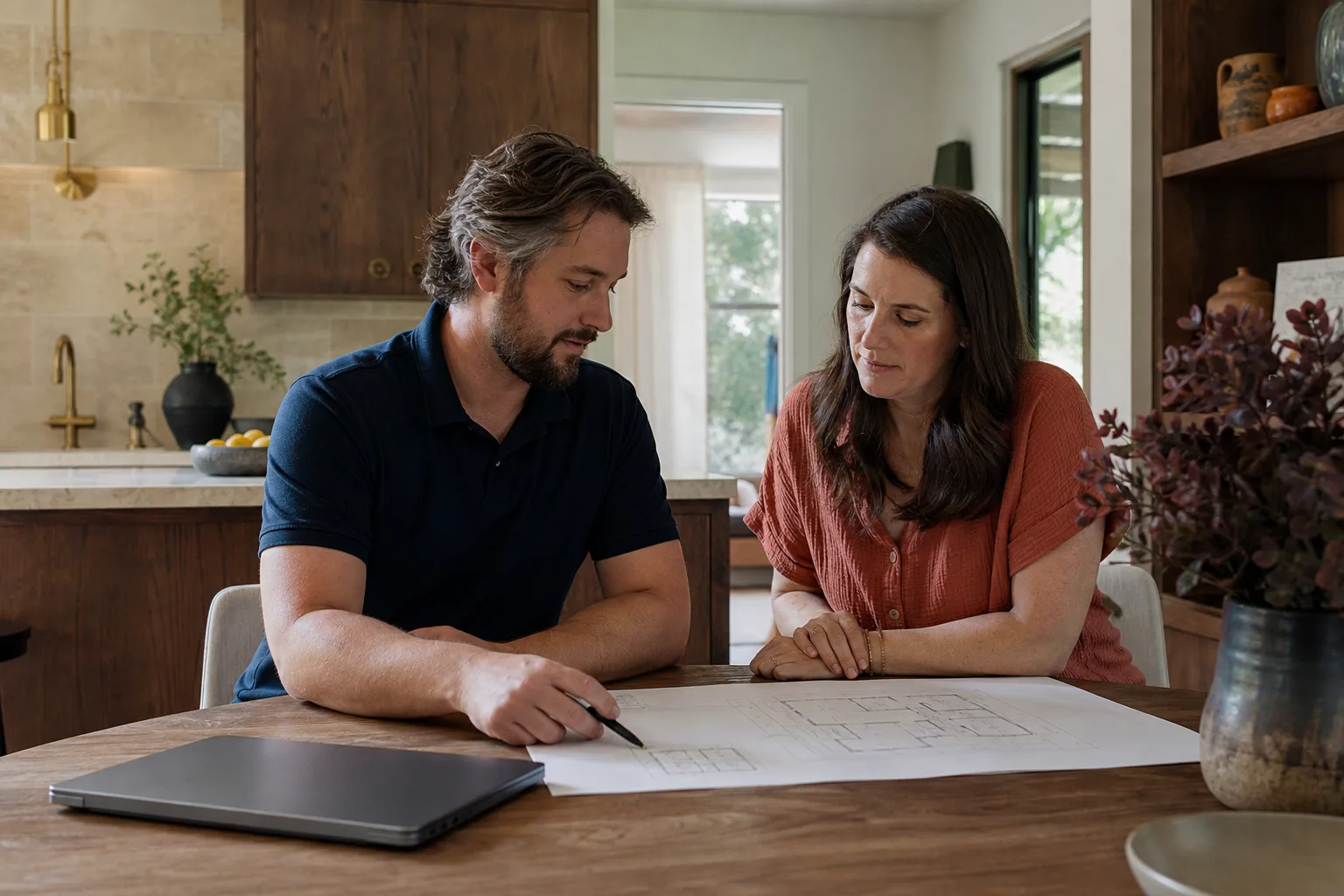
California’s ADU laws changed to favor the homeowner in ways that most cities quietly comply with and most contractors never learn. Know the 60-day rule, the setback exemption for existing structures, the end of owner-occupancy requirements, and the legalization pathway for unpermitted conversions. Those four facts will save you from the most common permit stalls, and you can find more guides & resources on our blog. If your project is in Pasadena, you benefit from a planning department that processes ADUs without the dysfunction of some neighboring cities, but the rules still require precise plans and knowledgeable execution. When you are ready to price the work, rather than just study it, call Fielding ADU Pasadena at (626) 657-5541 for a free estimate and a written price before any work begins.
Written by Reed Calloway, Owner at Fielding ADU Pasadena, serving Pasadena since 2006.